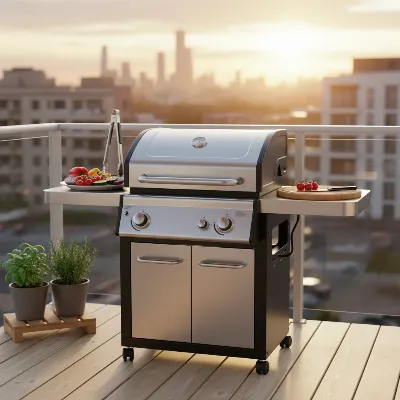
Choosing the perfect gas grill for your outdoor cooking adventures is an investment in countless memorable meals and effortless entertaining. But with so many options, how do you ensure your choice stands the test of time, especially against the elements that lead to dreaded rust? The answer often lies in the quality of stainless steel used in its construction. This comprehensive guide, crafted by an expert with over a decade in the grilling industry, will delve into the world of stainless steel gas grills, highlighting the best rust-resistant models for 2026 and providing all the insights you need to make an informed decision and keep your grill gleaming for years.
Understanding Stainless Steel Gas Grills
A gas grill is a versatile outdoor cooking appliance that utilizes propane or natural gas as its fuel source, offering convenience and precise temperature control. Its popularity stems from the ability to heat up quickly and consistently, allowing for spontaneous cookouts without the wait associated with charcoal. While various materials are used in grill manufacturing, stainless steel has emerged as a premium choice due to its inherent strength, aesthetic appeal, and, most importantly, its resistance to rust and corrosion.
Stainless steel’s remarkable durability comes from its composition, primarily iron alloyed with chromium. This chromium forms a passive, protective layer on the steel’s surface, preventing oxidation and thus rust. For gas grills, manufacturers typically utilize two main grades of stainless steel: 304 and 430. Understanding the differences between these grades is crucial for anyone seeking a truly rust-resistant appliance.
The 304 stainless steel grade, also known as 18/8, is widely considered the industry standard for high-quality grills because it contains approximately 18% chromium and 8% nickel. This nickel content significantly enhances its corrosion resistance, especially in harsh or acidic environments, making it a superior choice for long-term outdoor exposure. In contrast, 430 stainless steel, a more budget-friendly option, contains about 17% chromium but lacks nickel. While it still offers good corrosion resistance, it is generally less resilient to rust and corrosion than 304, particularly with prolonged exposure to acidic conditions. For components like exterior panels or less critical parts, 430 stainless steel might suffice, but for longevity and optimal rust prevention, 304 stainless steel is the preferred material for a grill’s core components and cooking surfaces.
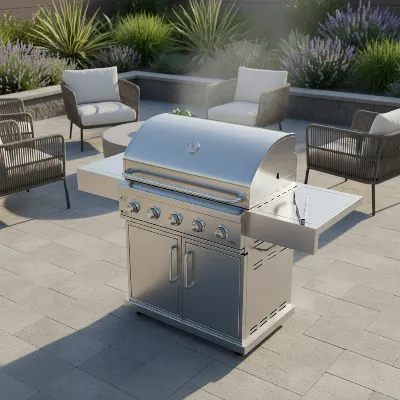 A sleek, modern stainless steel gas grill with multiple burners on a well-maintained outdoor patio setting, bathed in warm sunlight, ready for grilling
Advantages and Disadvantages of Stainless Steel Gas Grills
Stainless steel gas grills offer a compelling blend of benefits for the discerning outdoor chef, though they do come with a few considerations.
Advantages:
- Exceptional Durability and Rust Resistance: The primary draw of stainless steel is its inherent resistance to rust and corrosion, especially with 304-grade steel, ensuring your grill withstands diverse weather conditions and retains its structural integrity for many years.
- Ease of Cleaning and Maintenance: The smooth, non-porous surface of stainless steel makes it relatively easy to wipe down and clean, preventing food particles and grease from sticking and leading to premature wear.
- Sleek Aesthetic Appeal: Stainless steel grills boast a modern, professional, and sophisticated look that enhances any outdoor kitchen or patio space.
- Superior Temperature Control: High-quality stainless steel construction often correlates with better insulation and heat retention, allowing for more consistent and precise temperature management during cooking.
Disadvantages:
- Higher Initial Cost: Stainless steel grills, particularly those made with higher-grade 304 SS, typically have a higher upfront price tag compared to models constructed with lesser materials or other grill types.
- “Tea Staining” Potential: While rust-resistant, stainless steel can develop a phenomenon called “tea staining”—a brown discoloration that resembles rust but is typically superficial and can be removed with proper cleaning. This is often caused by environmental factors like salt air or harsh chemicals.
- Requires Regular Cleaning to Maintain Luster: To keep their pristine appearance and prevent minor surface imperfections, stainless steel grills do require consistent cleaning and polishing, especially after each use.
- Magnetic Properties (430 SS): While not a disadvantage for performance, 430 stainless steel is magnetic, which can sometimes be confused with lower quality by consumers expecting non-magnetic 304 SS in all components.
Stainless Steel Gas Grills Compared to Other Grill Types
When selecting an outdoor grill, the choice between gas, charcoal, and electric often comes down to a balance of convenience, flavor, and cost. Stainless steel gas grills offer a distinct set of characteristics when pitted against their counterparts.
Gas Grill vs. Charcoal Grill
Table is empty.Charcoal grills are prized for imparting a smoky, distinctive flavor to food that many grilling enthusiasts consider superior. However, they require more time to heat up, greater effort for temperature management, and a messier cleanup process involving ash disposal. Stainless steel gas grills, on the other hand, offer unparalleled convenience and speed. They light instantly, reach desired temperatures quickly, and provide precise heat control through multiple burners, allowing for various cooking zones. While some argue they lack the deep smoky flavor of charcoal, many gas grills offer accessory options like smoker boxes to bridge this gap. In terms of cost, a quality stainless steel gas grill often has a higher initial investment than a basic charcoal grill, but the ongoing fuel costs can be comparable or even lower over time, especially with natural gas hookups.
Gas Grill vs. Electric Grill
Electric grills are the epitome of convenience and safety, often suitable for indoor use or spaces with restrictions on open flames. They are generally compact, easy to clean, and require minimal setup. However, electric grills typically struggle to achieve the high temperatures necessary for searing, and they don’t produce the same char or flavor profile as flame-based grilling. Stainless steel gas grills excel in raw cooking power and performance. They deliver intense heat, perfect for searing steaks and achieving authentic grill marks, and offer a much larger cooking area for feeding crowds. While less portable than many electric models, gas grills are built for robust outdoor performance and culinary versatility, making them the preferred choice for serious outdoor cooking.
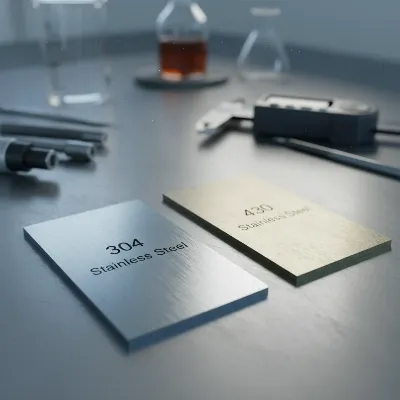 A side-by-side comparison of 304 and 430 stainless steel, showing their differing visual qualities and perhaps small labels indicating composition, set in a clean, industrial environment
Essential Factors When Choosing a Rust-Resistant Gas Grill
When investing in a gas grill designed to resist rust for years, several factors warrant close attention beyond just the shiny exterior.
Stainless Steel Grade and Construction Quality
This is paramount. Prioritize grills that specify the use of 304-grade stainless steel for their main components, such as the hood, firebox, burners, and cooking grates. While 430 SS can be used for non-critical exterior parts to keep costs down, a grill predominantly constructed with 304 SS will offer superior long-term corrosion resistance. Look for heavy-gauge stainless steel, which indicates a thicker, more durable material less prone to warping and damage. Examine the welds; clean, consistent welds are a sign of quality craftsmanship and contribute to the grill’s structural integrity against rust.
Size and Cooking Power (BTUs)
Consider your typical grilling needs. For small families or couples, a 2-3 burner grill might suffice. Larger families or those who frequently entertain will benefit from 4-6 burners and a more expansive cooking surface. Cooking power, measured in BTUs (British Thermal Units), indicates how much heat the grill can generate. Higher BTUs generally mean faster preheating and better searing capabilities, though efficient design and heat retention are equally important for even cooking.
Number of Burners and Heat Control
Multiple burners allow for versatile, zonal cooking. You can have a high-heat zone for searing, a medium-heat zone for cooking, and a low-heat zone for warming, all simultaneously. Look for burners made from high-quality stainless steel or cast brass for durability and even heat distribution. Independent burner controls are essential for precise temperature management across the cooking surface.
Additional Features and Warranty
Many high-end stainless steel grills come with valuable extras. Side burners are useful for preparing sauces or side dishes. Infrared searing burners can reach extremely high temperatures for a perfect crust on steaks. Rotisserie kits add versatility for roasting whole chickens or large cuts of meat. Consider convenient features like reliable ignition systems, integrated thermometers, and ample storage. Crucially, pay close attention to the warranty. Brands that offer extensive warranties on their stainless steel components (e.g., 10 years or even lifetime on certain parts like the firebox or burners) demonstrate confidence in their product’s rust resistance and overall durability.
Top Stainless Steel Gas Grills for 2026 That Resist Rust
When it comes to rust-resistant stainless steel Gas Grills, several models consistently earn high marks for their build quality, performance, and durability. Here’s a comparative look at some of the best options for 2026:
| Model | Key Material / SS Grade | Features Highlighting Durability / Rust Resistance