Properly seasoning new cast iron gas grill grates creates a natural non-stick surface, protects against rust, and enhances food flavor, ensuring optimal performance and longevity for your grill. This vital process involves cleaning, applying thin layers of high smoke point oil, and heating the grates multiple times to polymerize the oil onto the iron. Following a methodical approach with 3-4 seasoning cycles establishes a durable, rust-resistant finish.
Understanding Cast Iron Grate Seasoning
Seasoning, for cast iron, is a layer of polymerized oil baked onto the metal surface. This is a chemical transformation where oil breaks down and bonds to the iron, creating a smooth, durable, and protective finish. This black patina gives well-maintained cast iron its legendary qualities.
This process is crucial for new gas grill grates primarily because it defends against rust, a common issue for cast iron in outdoor environments. A properly seasoned surface also offers superior non-stick properties, making it easier to cook delicate foods and achieve perfect sear marks. This layer builds up over time, contributing to a richer flavor profile with every cook, investing in your grilling experience’s longevity and performance.
Preparation is Key: Before You Season
Before seasoning, proper preparation of new cast iron grates is paramount. This initial cleaning removes factory oils, protective waxes, or residues from manufacturing and shipping, ensuring a clean surface for the oil to bond with. Skipping this step can lead to an uneven or sticky seasoning layer.
First, perform an initial “burn-off.” Fire up your new gas grill to a high temperature, around 500-550°F (260-290°C), and let it run for about an hour with the lid closed. This high heat incinerates manufacturing coatings. After the burn-off, allow the grates to cool. Next, wash the grates thoroughly with warm, soapy water and a stiff brush. This is one of the few times soap should be used on cast iron, as the goal is to remove all contaminants. Rinse them completely and dry them immediately and meticulously with a clean towel to prevent flash rust. Ensure every nook and cranny is dry.
To tackle the seasoning process, gather these supplies:
- High smoke point cooking oil: Such as canola, vegetable, grapeseed, or avocado oil.
- Clean cloths or paper towels: For applying oil.
- Heat-resistant gloves: For safety.
- Grill brush: For future cleaning.
Selecting the Right Oil for Your Gas Grill
The type of oil chosen for seasoning cast iron grates significantly impacts the quality and durability of the polymerized layer. The key characteristic is a high smoke point. Oils with low smoke points will burn off or turn gummy rather than forming a hard, protective layer.
Ideal choices include:
- Canola Oil: Widely available with a good smoke point.
- Vegetable Oil: A common household staple, suitable for seasoning.
- Grapeseed Oil: Known for its very high smoke point and neutral flavor.
- Avocado Oil: Offers one of the highest smoke points, making it an excellent, though pricier, option.
While some suggest olive oil, its lower smoke point makes it less ideal for seasoning at the required high temperatures. Be cautious with cooking sprays containing soy lecithin, as these can create a sticky residue. Stick to pure, high smoke point oils for the best results.
Step-by-Step Guide to Seasoning New Cast Iron Gas Grill Grates
Achieving perfectly seasoned grates is straightforward when these steps are followed carefully. The goal is to build multiple thin layers of polymerized oil, creating a robust, non-stick, and rust-resistant surface.
Step 1: Initial Burn-Off (Optional but Recommended)
|
Our Picks for the Best Gas Grill in 2026
As an Amazon Associate I earn from qualifying purchases.
|
||
| Num | Product | Action |
|---|---|---|
| 1 | Endark 3-burner Propane Gas Grill | 37,000 BTU Stainless Steel with Side-iFre Function | with Enameled Cast Iron Grate,Thermometer and Side Stand Wheels | Great for Patio and Garden Outdoor Cooking |

|
| 2 | GasOne GP-1030S One 3 Burner Stainless Steel– Outdoor Cabinet Style with Wheels-High-Temperature Paint Coating Gas BBQ Grill – Elegant and Luxurious Design, Black |
|
| 3 | R.W.FLAME 4-Burner Propane Gas Grill with Side Burner, Stainless Steel Propane Grill 42000BTU for Outdoor Cooking, with Porcelain-Enameled Cast Iron Grates, Baking Pan, Silver |
|
| 4 | Black Portable Gas Grill, Dual 10,000 BTU Burners, 275 Sq.In Cooking Space, Push-to-Start Ignition, Wind-Proof Lid with Built-in Thermometer, Perfect for Camping Tailgates & Backyard BBQ Cookouts |
|
| 5 | Monument Grills 4 Burner Propane Gas Grill, Stainless Steel Outdoor Patio Barbecue Grill, with Broil Zone Fast Heating, Knob Control, and Easy Cleanup, M410MBZ |
|
| 6 | Tabletop Gas Grill 3-Burner, 22-inch Portable Propane Grill, 30,000 BTUs Stainless Steel Grill with Foldable Legs, Ideal for BBQ, Camping, Patio, Backyard, Tailgate, and Holiday Gatherings |
|
| 7 | WAA Portable Propane Griddle, Tabletop Portable Propane Gas Grill, Stainless Steel Flat Top Grill, Outdoor Cooking for Tailgating,Camping, RVs, BBQ, Patio, Silver (3-Burner-2) |
|
| 8 | Endark 4-burner propane gas grill | Stainless steel construction | Dual side racks and wheels | Designed for patio, garden, and backyard cooking |
|
| 9 | Cuisinart Chef's Style Tabletop Portable Propane Grill, 20,000 BTU Stainless Steel 2-Burner Outdoor Gas Grill for Camping, Tailgates, BBQ, Hassle-Free Setup, Twist-Start Ignition, CGG-306 |
|
| 10 | 2 Burner Propane Gas Grill with 26,500 BTUs Output, Porcelain-Enamel Main Body and Lid, Propane BBQ Grill with Warming Rack & Side Tables for Patio, Backyard, Poolside Gatherings |
|
As mentioned, if your grill is brand new, performing a high-heat burn-off at 500-550°F (260-290°C) for an hour effectively removes any residual factory coatings, providing a clean slate for seasoning.
Step 2: Clean and Dry Thoroughly
After the burn-off (or if skipping it), allow the grates to cool. Wash them with warm, soapy water and a sturdy brush to remove manufacturing residues or loosened coatings. Rinse thoroughly and dry immediately and completely with a clean towel to prevent rust. Ensure no moisture remains on the iron.
Step 3: Apply a Thin, Even Layer of Oil
Using a clean cloth or paper towel, apply a very thin and even layer of your chosen high smoke point oil (canola, vegetable, grapeseed, or avocado oil) to all surfaces of the cast iron grates. This includes the top, bottom, and between the grates. It is crucial to wipe off any excess oil. Too much oil can result in a sticky, gummy residue rather than a hard, seasoned finish, and can also lead to flare-ups during heating. The grates should appear slightly shiny, not visibly wet or greasy.
> “The secret to successful cast iron seasoning isn’t the amount of oil, but the thinness and evenness of each layer. Less is truly more.” – Chef Isabella Rossi, Grill Master & Culinary Consultant
Step 4: Heat the Grates
Place the lightly oiled grates back onto your gas grill. Close the lid and preheat your grill to a temperature of 400-450°F (205-230°C). Allow the grates to heat at this temperature for 30-60 minutes. During this time, the oil will polymerize, bonding with the cast iron. Some smoke may be noticed, which is a normal part of the process as the oil transforms.
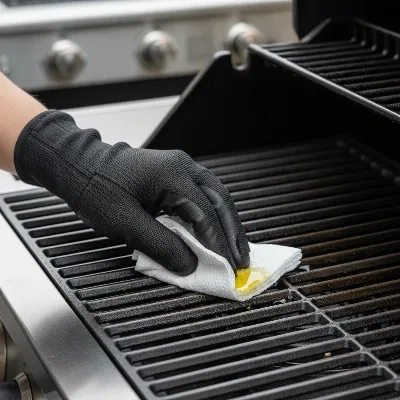 A person applying a thin layer of high-smoke-point oil to new cast iron gas grill grates with a paper towel
Step 5: Cool and Repeat
After the heating cycle, turn off the grill and allow the grates to cool completely within the grill with the lid closed. This cooling period is essential for the seasoning layer to properly set and harden. Once cool, repeat Steps 3 and 4 (applying oil, heating, and cooling) at least 2-3 more times. Each repetition builds upon the previous layer, creating a stronger, more durable, and naturally non-stick seasoning. Aim for 3-4 total seasoning cycles before your first cook.
Maintaining Your Seasoned Grates for Lasting Performance
Seasoning new cast iron grates is just the beginning. Regular maintenance is key to preserving that protective layer and ensuring grates perform beautifully for years. Think of it as a continuous process, where each cook contributes to the seasoning.
After each use, once the grill has cooled slightly but is still warm, use a stiff grill brush or scraper to remove stuck-on food particles or debris. Avoid harsh metal brushes that could strip the seasoning. Once cleaned, apply a very light coat of high smoke point oil to the grates using a paper towel. This replenishes any seasoning that might have worn off during cooking and protects against moisture while the grill is stored.
While vigorous cleaning with soap is generally avoided on seasoned cast iron, an annual deep clean with mild soap and water might be necessary if excessive sticky residue or rust develops. If rust appears, gently scrub the affected area with steel wool or a fine-grit sanding pad until removed, then wash, dry, and immediately re-season the affected area (or the entire grates) following the steps outlined above. Always ensure grates are completely dry before storing, especially in humid climates, to prevent rust.
Common Mistakes to Avoid
Seasoning cast iron is not overly complicated, but certain pitfalls can hinder the process or damage your grates. Being aware of these common mistakes helps achieve the best results.
- Applying Too Much Oil: This is perhaps the most frequent error. An excessive layer of oil will not polymerize effectively. Instead, it will turn into a sticky, gummy mess that can attract dirt and even cause flare-ups during grilling. Always wipe off excess oil until the grates appear almost dry, with just a slight sheen.
- Using Low Smoke Point Oil: Oils like olive oil have a lower smoke point and will simply burn and create an unpleasant odor and taste, rather than forming a durable seasoning layer. Stick to oils specifically recommended for high-heat cooking.
- Not Repeating the Process Enough: A single layer of seasoning isn’t enough to provide robust protection or a truly non-stick surface. The strength of seasoning comes from multiple thin, polymerized layers. Aim for at least 3-4 cycles to build a solid foundation.
- Improper Cooling: Rushing the cooling process or exposing hot grates to sudden temperature changes can compromise the integrity of the seasoning. Always allow the grates to cool naturally and completely within the grill with the lid closed.
- Ignoring Initial Cleaning: Failing to clean off factory coatings or residues before the first seasoning can prevent the oil from properly bonding, leading to an uneven and ineffective seasoning.
By avoiding these common errors, you’ll ensure your new cast iron gas grill grates develop a perfect, long-lasting seasoning that enhances your grilling experience for years.
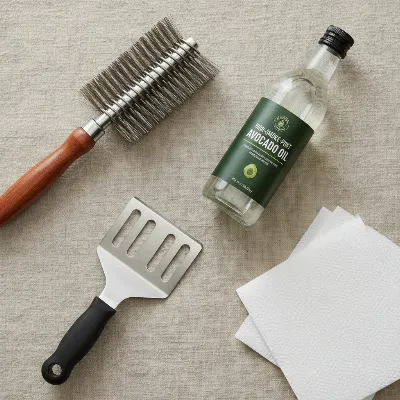 A collection of grill cleaning tools, including a brush, scraper, and oil bottle, for cast iron grates
Conclusion
Properly seasoning new cast iron gas grill grates is an investment in the longevity and performance of your grilling equipment. By understanding the science behind polymerization, selecting the right oils, and following a methodical multi-step process, you establish a non-stick, rust-resistant surface that will improve your outdoor cooking. maintenance is an ongoing commitment, with each use contributing to the grates’ evolving patina. Embrace this ritual, and your cast iron grates will reward you with years of delicious, perfectly seared meals.
What’s the first dish you’re excited to cook on your newly seasoned cast iron gas grill grates?
Frequently Asked Questions
How often should I season my cast iron grates?
After the initial 3-4 seasoning cycles, you don’t need to perform a full re-seasoning often. A light coat of oil after each use helps maintain the seasoning. You might consider a full re-seasoning every few months, or if you notice food sticking more, or if any rust appears.
Can I use olive oil to season my cast iron grates?
It’s not recommended to use olive oil for seasoning. Olive oil has a relatively low smoke point compared to other cooking oils like canola, vegetable, or grapeseed oil. At the high temperatures required for seasoning, olive oil tends to burn and become sticky or rancid rather than forming a hard, protective layer.
What if my cast iron grates rust?
If your cast iron grates develop rust, don’t worry, they can often be salvaged. Gently scrub the rusted areas with steel wool or a fine-grit sanding pad until the rust is removed. Then, wash the grates with warm, soapy water, dry them thoroughly, and immediately proceed with a full re-seasoning process (applying multiple layers of oil and heating cycles) to re-establish the protective seasoning.
How long does it take to season new cast iron grill grates?
The initial seasoning process for new cast iron grill grates typically takes 2-4 hours, including cooling time between cycles. Each heating cycle at 400-450°F (205-230°C) lasts 30-60 minutes, and you should aim for 3-4 total cycles.
What is the best oil for seasoning cast iron grill grates?
The best oils for seasoning cast iron grill grates are those with high smoke points, such as canola oil, vegetable oil, grapeseed oil, or avocado oil. These oils polymerize effectively at high temperatures, creating a durable, non-stick layer without becoming sticky or rancid.
Can I season cast iron grates in an oven instead of a grill?
Yes, you can season cast iron grates in an oven if they fit. Preheat your oven to 400-450°F (205-230°C) and follow the same steps: apply a thin layer of high smoke point oil, bake for 30-60 minutes, then cool completely. Repeat 3-4 times for optimal seasoning.
Frequently Asked Questions
How often should I season my cast iron grates?
After the initial 3-4 seasoning cycles, a full re-seasoning is not often needed. A light coat of oil after each use helps maintain the seasoning. Consider a full re-seasoning every few months, or if food sticks more, or if rust appears.
Can I use olive oil to season my cast iron grates?
It is not recommended to use olive oil for seasoning cast iron grates. Olive oil has a relatively low smoke point compared to oils like canola or grapeseed, causing it to burn and become sticky or rancid at the high temperatures required for proper polymerization.
What if my cast iron grates rust?
If cast iron grates develop rust, they can often be salvaged. Gently scrub rusted areas with steel wool or a fine-grit sanding pad until the rust is removed. Then, wash with warm, soapy water, dry thoroughly, and immediately re-season with multiple layers of oil and heating cycles.
How long does it take to season new cast iron grill grates?
The initial seasoning process for new cast iron grill grates typically takes 2-4 hours, including cooling time between cycles. Each heating cycle at 400-450u00b0F (205-230u00b0C) lasts 30-60 minutes, and you should aim for 3-4 total cycles.
What is the best oil for seasoning cast iron grill grates?
The best oils for seasoning cast iron grill grates are those with high smoke points, such as canola oil, vegetable oil, grapeseed oil, or avocado oil. These oils polymerize effectively at high temperatures, creating a durable, non-stick layer without becoming sticky or rancid.
Can I season cast iron grates in an oven instead of a grill?
Yes, you can season cast iron grates in an oven if they fit. Preheat your oven to 400-450u00b0F (205-230u00b0C) and follow the same steps: apply a thin layer of high smoke point oil, bake for 30-60 minutes, then cool completely. Repeat 3-4 times for optimal seasoning.
Season New Cast Iron Gas Grill Grates
Properly seasoning new cast iron gas grill grates creates a natural non-stick surface, protects against rust, and enhances food flavor. This guide outlines the steps to achieve a durable, rust-resistant finish.
If your grill is brand new, perform a high-heat burn-off. Fire up your gas grill to 500-550u00b0F (260-290u00b0C) and let it run for about an hour with the lid closed to remove any residual factory coatings. This provides a clean slate for seasoning.
After the burn-off (or if skipping it), allow the grates to cool. Wash them with warm, soapy water and a sturdy brush to remove manufacturing residues. Rinse thoroughly and dry immediately and completely with a clean towel to prevent rust formation, ensuring no moisture remains.
Using a clean cloth or paper towel, apply a very thin and even layer of high smoke point oil (canola, vegetable, grapeseed, or avocado oil) to all surfaces of the grates. Wipe off any excess oil until the grates appear slightly shiny, not visibly wet or greasy. Too much oil can result in a sticky residue.
Place the lightly oiled grates back onto your gas grill. Close the lid and preheat your grill to 400-450u00b0F (205-230u00b0C). Allow the grates to heat at this temperature for 30-60 minutes. During this time, the oil will polymerize, bonding with the cast iron, and some smoke may be noticed.
After the heating cycle, turn off the grill and allow the grates to cool completely within the grill with the lid closed. This cooling period is essential for the seasoning layer to properly set and harden. Once cool, repeat the oil application, heating, and cooling steps at least 2-3 more times, aiming for 3-4 total seasoning cycles before your first cook.

I just got a new Weber grill and was dreading the seasoning process for the cast iron grates. Your guide on applying thin layers of high smoke point oil and doing multiple heating cycles made it so much easier than I thought. My steaks are already tasting better and I’m not worried about rust at all. Thanks for the clear instructions!
This guide was a lifesaver! I’ve always struggled with rust on my old cast iron grates, and I was determined to do it right with my new ones. The explanation of how the oil polymerizes and bonds to the iron really helped me understand the ‘why’ behind each step. My burgers slid right off last night, no sticking at all!
This was a solid guide for getting my new grates ready. I appreciated the emphasis on cleaning them thoroughly before starting. I’ve always just done one or two seasoning cycles, but doing the recommended 3-4 really made a difference in the non-stick surface. My only minor complaint is that it took a bit longer than I expected, but the results are worth it.
I followed the steps for seasoning my new grates, especially the part about the black patina. While it definitely helped prevent rust, I still had a little bit of sticking on my first cook. Maybe I didn’t use enough oil or my grill temp wasn’t consistent enough. It’s better than before, but not quite the ‘legendary qualities’ I was hoping for right away.