There’s nothing quite like the allure of a perfectly grilled meal, but before that first sizzle hits the grates, a crucial step demands your undivided attention: safely connecting your propane tank to your gas grill. As a seasoned technician with over a decade in grilling, I’ve seen countless setups, and I can tell you that proper connection isn’t just about convenience; it’s paramount for your safety and the longevity of your equipment. This comprehensive guide will walk you through every essential step, empowering you to connect your propane tank with confidence and ensure your barbecuing adventures are as safe as they are delicious.
Understanding Your Gas Grill and Propane Tank
At its core, a gas grill relies on a precise system to deliver fuel from the propane tank to its burners. The propane tank, typically a 20-pound cylinder, stores the liquefied petroleum gas under pressure. A crucial component, the regulator, then attaches to the tank valve, reducing the high pressure of the propane to a safe, consistent level suitable for your grill’s burners. From the regulator, a flexible hose carries the gas to your grill’s manifold and individual burner controls. Understanding this simple yet critical chain—tank, regulator, hose, burners—highlights why a secure, leak-free connection is the foundation of safe grilling.
Essential Safety Preparations Before You Begin
Before you even think about twisting a connection, safety must be your absolute priority. Grilling with propane involves handling a combustible fuel, so a methodical approach is key. Always choose a well-ventilated outdoor area for your grill setup, keeping it a minimum of six feet away from your home, fences, and any other flammable structures or materials. Ensure that all burner control knobs on your grill are in the “OFF” position, and crucially, verify that the propane tank valve itself is fully closed by turning it clockwise until tight.
Before attaching anything, perform a quick but thorough inspection. Check your propane tank for any visible signs of damage such as dents, rust, or cracks, and confirm its expiration date, typically stamped on the tank’s collar. Examine the grill’s regulator and hose for fraying, cracks, or any obstruction. The small rubber O-ring inside the tank valve, which helps create a seal, should also be present and free from damage. Having a pair of safety gloves and goggles on hand is a smart precaution, along with a simple solution of dish soap and water for a crucial leak test later.
Step-by-Step Guide to Connecting Your Propane Tank
Connecting your propane tank is a straightforward process when approached systematically. Begin by positioning the propane tank upright and securely in the designated holder beneath or beside your grill. Most grills are designed with a specific spot to ensure stability and proper ventilation.
Next, carefully remove the plastic safety cap or plug from the propane tank’s nozzle. These caps are usually brightly colored and are designed to protect the valve’s threads and keep out debris during transport or storage. Once the cap is off, ensure no debris has fallen into the valve opening.
Now, take the regulator on your grill’s gas line and align its coupling nut with the propane tank’s valve. The connection is threaded, so it’s essential to ensure proper alignment to avoid cross-threading, which can damage both the tank valve and the regulator. Gently push the regulator onto the tank valve until it sits flush.
With the regulator aligned, begin turning the coupling nut clockwise. Hand-tighten it firmly until it feels snug. Modern grill connections are designed to seal effectively with hand-tightening, and excessive force or the use of a wrench can actually damage the O-ring or threads, potentially leading to leaks. A firm, comfortable hand-tightening is all that’s typically required to create a secure seal.
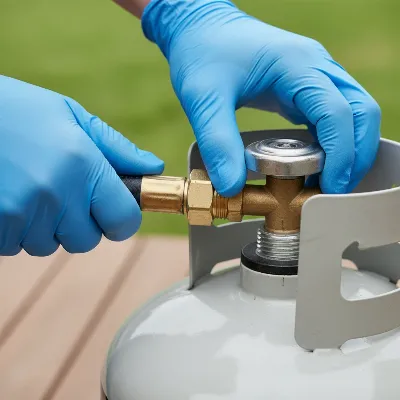 A close-up image showing hands carefully aligning a gas grill's regulator hose with a propane tank valve.
The Critical Leak Test: Ensuring a Secure Seal
Connecting your propane tank is only half the battle; the truly non-negotiable step is performing a leak test to ensure your connection is absolutely secure. Skipping this step is a significant safety risk that could have severe consequences. To perform this vital check, mix a solution of equal parts dish soap and water in a small container.
Once your soap solution is ready, brush or spray it generously onto all connections you’ve just made. This includes the area where the regulator attaches to the propane tank valve. Ensure the entire connection point is thoroughly coated with the soapy water.
Now, slowly and carefully turn the propane tank valve counter-clockwise to open it. As the gas begins to flow, closely observe the soapy solution you applied. If you see any bubbles forming, especially persistent ones, it’s a clear indication that gas is escaping, meaning you have a leak. Should bubbles appear, immediately turn off the propane tank valve, re-tighten the connection, and repeat the leak test. If bubbles still form after re-tightening, do not attempt to use the grill. Disconnect the tank, check for any damaged parts, and contact a professional or your propane supplier for assistance. Never use a flame or lighter to check for leaks.
Turning On Your Propane Tank and Lighting the Grill Safely
With a confirmed leak-free connection, you’re ready to bring your grill to life. Begin by slowly turning the propane tank valve counter-clockwise until it’s fully open. It’s important to open the valve slowly, as rapidly opening it can sometimes trigger the grill’s excess flow safety device. This device, designed to prevent uncontrolled gas release in case of a major leak, can restrict the gas flow, leading to low flames or difficulty igniting your grill even when the tank is full. If this happens, close the tank valve, turn off all burner knobs, wait a minute, and then slowly reopen the tank valve.
Before attempting to light your grill, always ensure the grill lid is fully open. This prevents any potential buildup of gas within the grill chamber, which could lead to a dangerous flare-up upon ignition. Turn on one burner to the “HIGH” setting, then immediately press and hold your grill’s igniter button. You should hear a clicking sound followed by the burner igniting. Once the first burner is lit, you can turn on other burners as needed. If the burner does not ignite after a few attempts, turn off the burner control knob and the propane tank valve, wait five to ten minutes for any residual gas to dissipate, and then repeat the lighting process.
Propane Tank Safety Beyond Connection
Ensuring a safe connection is fundamental, but responsible propane use extends far beyond the initial setup. When transporting propane tanks, whether full or empty, always keep them upright and secured in a well-ventilated area of your vehicle, such as the backseat floor, with windows slightly open. Never transport a tank in an enclosed trunk, and always drive directly to your destination to avoid leaving a tank in a hot vehicle for extended periods.
For storage, always keep propane tanks outdoors, in an upright position, and away from direct sunlight, heat sources, or any potential ignition points. Never store spare propane tanks under your grill or indoors, including garages or sheds. Regular maintenance is crucial; periodically inspect your grill’s hoses and connections for signs of wear and tear, and re-perform the leak test at the start of each grilling season or whenever you change tanks. If you notice any damage or suspect an issue, replace components or seek professional advice immediately.
> “Safety with your gas grill starts before you even light it. A thorough pre-check and a proper leak test are non-negotiable steps for every grilling enthusiast.” – John Smith, Certified Gas Grill Technician
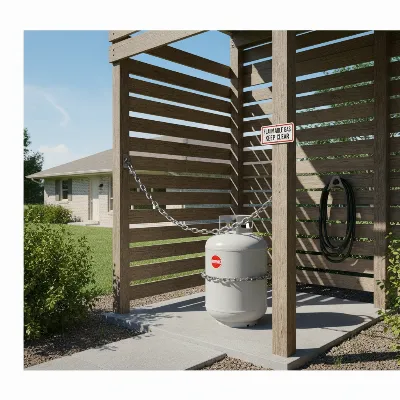 A safely stored propane tank outdoors, away from a grill and direct sunlight, emphasizing proper placement.
Conclusion
Connecting a propane tank to your gas grill might seem like a simple task, but mastering the safe and correct procedure is essential for every outdoor cooking enthusiast. By following these detailed steps—from meticulous safety preparations and careful connection to the critical leak test and proper tank management—you ensure not only the optimal performance of your grill but, more importantly, the safety of everyone around it. Embrace these best practices, and you’ll unlock years of delicious, worry-free barbecuing experiences, transforming your backyard into the ultimate culinary haven. What’s your go-to grilling recipe you can’t wait to fire up safely?
Frequently Asked Questions
Can I use a wrench to tighten the propane tank connection?
|
Our Picks for the Best Gas Grill in 2026
As an Amazon Associate I earn from qualifying purchases.
|
||
| Num | Product | Action |
|---|---|---|
| 1 | Endark 3-burner Propane Gas Grill | 37,000 BTU Stainless Steel with Side-iFre Function | with Enameled Cast Iron Grate,Thermometer and Side Stand Wheels | Great for Patio and Garden Outdoor Cooking |

|
| 2 | R.W.FLAME 4-Burner Propane Gas Grill with Side Burner, Stainless Steel Propane Grill 42000BTU for Outdoor Cooking, with Porcelain-Enameled Cast Iron Grates, Baking Pan, Silver |
|
| 3 | Black Portable Gas Grill, Dual 10,000 BTU Burners, 275 Sq.In Cooking Space, Push-to-Start Ignition, Wind-Proof Lid with Built-in Thermometer, Perfect for Camping Tailgates & Backyard BBQ Cookouts |
|
| 4 | Monument Grills 4 Burner Propane Gas Grill, Stainless Steel Outdoor Patio Barbecue Grill, with Broil Zone Fast Heating, Knob Control, and Easy Cleanup, M410MBZ |
|
| 5 | 2 Burner Propane Gas Grill with 26,500 BTUs Output, Porcelain-Enamel Main Body and Lid, Propane BBQ Grill with Warming Rack & Side Tables for Patio, Backyard, Poolside Gatherings |
|
| 6 | Tabletop Gas Grill 3-Burner, 22-inch Portable Propane Grill, 30,000 BTUs Stainless Steel Grill with Foldable Legs, Ideal for BBQ, Camping, Patio, Backyard, Tailgate, and Holiday Gatherings |
|
| 7 | Cuisinart Chef's Style Tabletop Portable Propane Grill, 20,000 BTU Stainless Steel 2-Burner Outdoor Gas Grill for Camping, Tailgates, BBQ, Hassle-Free Setup, Twist-Start Ignition, CGG-306 |
|
| 8 | Endark 4-burner propane gas grill | Stainless steel construction | Dual side racks and wheels | Designed for patio, garden, and backyard cooking |
|
| 9 | GasOne GP-1030S One 3 Burner Stainless Steel– Outdoor Cabinet Style with Wheels-High-Temperature Paint Coating Gas BBQ Grill – Elegant and Luxurious Design, Black |
|
| 10 | WAA Portable Propane Griddle, Tabletop Portable Propane Gas Grill, Stainless Steel Flat Top Grill, Outdoor Cooking for Tailgating,Camping, RVs, BBQ, Patio, Silver (3-Burner-2) |
|
While a wrench might seem to offer extra security, it’s generally not recommended for connecting your propane tank. Most modern grill regulators are designed for hand-tightening only. Over-tightening with a wrench can damage the O-ring seal or strip the threads, potentially causing a leak rather than preventing one.
What causes low flame after connecting a new tank?
Low flame issues often occur if the propane tank valve is opened too quickly. This can activate the grill’s excess flow safety device, which restricts gas flow. To reset it, turn off the tank valve and all burner knobs, wait a minute, and then slowly reopen the tank valve before attempting to light the grill.
How often should I check for propane leaks?
You should perform a leak test using soapy water every time you connect a new propane tank or after any period of storage. It’s also a good practice to visually inspect hoses and connections before each grilling session to ensure there’s no visible wear or damage.
Is it safe to store a spare propane tank under my grill?
No, it is not safe to store a spare propane tank under your grill, or even near it. Propane tanks should always be stored outdoors in an upright position, away from direct sunlight, heat sources, and any potential ignition sources. Storing them under a hot grill increases the risk of an accident.
What should I do if I smell gas while grilling?
If you smell gas while grilling, immediately turn off all grill burner knobs and then close the propane tank valve. Evacuate everyone from the area and call your local fire department. Do not try to find the source of the leak or restart the grill until professionals have deemed it safe.