A gas grill that isn’t reaching its usual high temperatures, often struggling to exceed 200-300°F when it should hit 500-550°F within 10-15 minutes, typically indicates a disruption in fuel flow or airflow. Common causes include an empty propane tank, the gas regulator entering bypass mode, clogged burner ports, or obstructions in the venturi tubes. Addressing these issues with DIY fixes can restore your grill’s performance for optimal cooking.
Understanding Your Gas Grill’s Heat Problems
Why isn’t your gas grill getting hot enough? A gas grill relies on a precise balance of fuel flow and airflow to generate consistent heat. When this balance is disrupted, your grill’s performance suffers. Common culprits range from simple oversight to components needing a good clean or replacement parts. Low flames, uneven heating across the cooking surface, or even a complete failure to ignite are all tell-tale signs that something is amiss within your grill’s intricate system.
Initial Troubleshooting: The Gas Flow Basics
Before diving into complex repairs, always start with the basics of gas flow. Begin by ensuring your propane tank isn’t empty or critically low. You can check the tank’s level by pouring warm water down its side; the top of the cool spot indicates the propane level, or simply by weighing it and subtracting the tare weight listed on the tank’s handle.
A frequent cause of low heat is the gas regulator entering “bypass mode.” This safety feature, designed to prevent uncontrolled gas flow, can be triggered if the propane tank valve is opened too quickly or if the burner knobs are turned on before the tank valve. When the regulator is in bypass mode, it significantly restricts gas flow, leading to low flames and insufficient heat.
Resetting the gas regulator is often the quickest fix:
- Turn everything off: Ensure all burner control knobs, including any side burners, are in the OFF position, then turn off the gas valve on the propane tank.
- Disconnect: Detach the regulator from the propane tank.
- Release pressure: Open the grill lid and turn all burner knobs to HIGH. Allow them to remain open for 1 to 5 minutes to release any residual gas pressure in the lines.
- Close burners: Turn all burner knobs back to the OFF position.
- Reconnect slowly: Reattach the regulator securely to the propane tank.
- Open tank valve slowly: Slowly open the propane tank valve all the way, taking about 10-15 seconds. This gradual opening prevents the bypass mechanism from tripping again.
- Wait and light: Wait for approximately 30-60 seconds for pressure to stabilize before attempting to light your grill as usual.
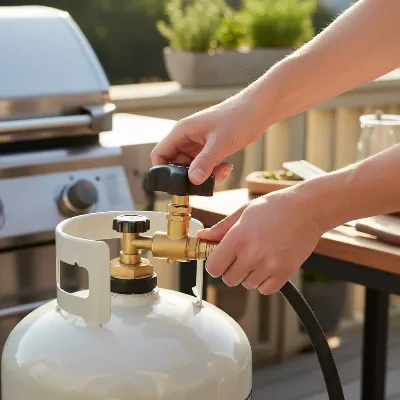 Man resetting a gas grill regulator with the propane tank off
Inspecting Key Components for Low Heat
If a regulator reset doesn’t resolve the issue, it’s time to examine the individual components of your gas grill more closely. Each part plays a vital role in delivering and burning gas efficiently.
Gas Regulator and Hose Issues
|
Our Picks for the Best Gas Grill in 2026
As an Amazon Associate I earn from qualifying purchases.
|
||
| Num | Product | Action |
|---|---|---|
| 1 | R.W.FLAME 4-Burner Propane Gas Grill with Side Burner, Stainless Steel Propane Grill 42000BTU for Outdoor Cooking, with Porcelain-Enameled Cast Iron Grates, Baking Pan, Silver |

|
| 2 | Endark 3-burner Propane Gas Grill | 37,000 BTU Stainless Steel with Side-iFre Function | with Enameled Cast Iron Grate,Thermometer and Side Stand Wheels | Great for Patio and Garden Outdoor Cooking |
|
| 3 | Black Portable Gas Grill, Dual 10,000 BTU Burners, 275 Sq.In Cooking Space, Push-to-Start Ignition, Wind-Proof Lid with Built-in Thermometer, Perfect for Camping Tailgates & Backyard BBQ Cookouts |
|
| 4 | Tabletop Gas Grill 3-Burner, 22-inch Portable Propane Grill, 30,000 BTUs Stainless Steel Grill with Foldable Legs, Ideal for BBQ, Camping, Patio, Backyard, Tailgate, and Holiday Gatherings |
|
| 5 | WAA Portable Propane Griddle, Tabletop Portable Propane Gas Grill, Stainless Steel Flat Top Grill, Outdoor Cooking for Tailgating,Camping, RVs, BBQ, Patio, Silver (3-Burner-2) |
|
| 6 | Cuisinart Chef's Style Tabletop Portable Propane Grill, 20,000 BTU Stainless Steel 2-Burner Outdoor Gas Grill for Camping, Tailgates, BBQ, Hassle-Free Setup, Twist-Start Ignition, CGG-306 |
|
| 7 | Endark 4-burner propane gas grill | Stainless steel construction | Dual side racks and wheels | Designed for patio, garden, and backyard cooking |
|
| 8 | GasOne GP-1030S One 3 Burner Stainless Steel– Outdoor Cabinet Style with Wheels-High-Temperature Paint Coating Gas BBQ Grill – Elegant and Luxurious Design, Black |
|
| 9 | Monument Grills 4 Burner Propane Gas Grill, Stainless Steel Outdoor Patio Barbecue Grill, with Broil Zone Fast Heating, Knob Control, and Easy Cleanup, M410MBZ |
|
| 10 | 2 Burner Propane Gas Grill with 26,500 BTUs Output, Porcelain-Enamel Main Body and Lid, Propane BBQ Grill with Warming Rack & Side Tables for Patio, Backyard, Poolside Gatherings |
|
A faulty regulator or a leaky gas hose can drastically reduce the gas supply to your burners. Inspect the hose for any visible kinks, cracks, or damage. To check for leaks, create a soapy water solution (equal parts dish soap and water) and apply it generously to all gas connections, including where the hose connects to the tank and the grill, and along the hose itself. If bubbles appear, you have a gas leak. This is a safety hazard, and the hose or regulator must be replaced immediately.
Burner Problems
Over time, burner ports can become clogged with grease, food debris, or rust, leading to uneven or low flames. Signs of clogged burners include weak, yellow, or orange flames instead of strong blue ones, or areas of the burner that don’t light at all. Worn or damaged burners, indicated by cracks or significant corrosion, will also impede heat output and may need replacement.
Venturi Tubes
The venturi tubes are where gas mixes with air before reaching the burners. These tubes are often a favorite nesting spot for spiders and other insects, especially during periods of inactivity. A spider web or insect nest can partially block the gas flow, leading to low heat, yellow flames, or even dangerous “flashbacks” (fire within the venturi tube). Inspect these tubes carefully for any obstructions.
Step-by-Step DIY Fixes for a Cold Grill
Once you’ve identified the potential cause, these DIY steps will guide you through the repair process. Always ensure the gas supply is turned off and the grill is completely cool before starting any work.
Cleaning Clogged Burner Ports
- Remove burners: Carefully detach the cooking grates, flavorizer bars, and then the burners themselves. Consult your grill’s manual for specific instructions on removing burners, as they may be held in place by screws or cotter pins.
- Clear ports: Use a straightened paperclip, a small drill bit, or a specialized burner cleaning tool to clear each individual port hole on the burner. Avoid wooden toothpicks as they can break off and worsen the clog.
- Brush and clean: Use a wire brush to scrub the exterior of the burners, removing any rust or grease build-up. For stubborn grime, a solution of warm soapy water can help, but ensure the burners are thoroughly dried immediately afterward to prevent further rust.
- Clear venturi inlets: Use a bottle brush to clean the burner’s orifice and air shutter, as well as the inlet part of the venturi tube where the burner connects.
- Compressed air: Blast canned or compressed air through the burner and venturi tubes to force out any loose debris.
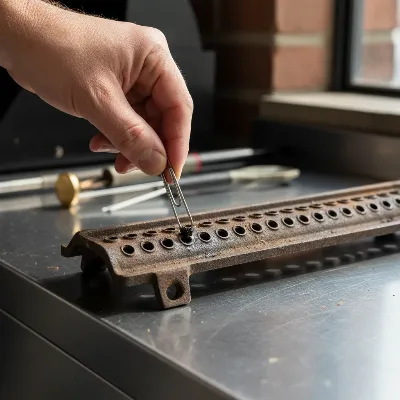 Close-up of a hand cleaning gas grill burner ports with a wire
Clearing Venturi Tubes
- Access: With the burners removed, you’ll have direct access to the venturi tubes.
- Insert brush: Use a flexible venturi brush or a pipe cleaner to carefully snake through the entire length of each tube. Rotate the brush as you go to dislodge any spider webs, insect nests, or debris.
- Visual inspection: Use a flashlight to inspect the tubes thoroughly, ensuring they are completely clear. A quick burst of compressed air can also help remove any remaining particles.
Performing a Leak Test
As mentioned earlier, the soapy water test is critical for identifying gas leaks.
- Prepare solution: Mix equal parts dish soap and water in a spray bottle or small bowl.
- Apply: With the gas tank valve slowly turned ON, apply the soapy solution to all connections from the tank to the grill’s manifold, including the regulator, hose, and where the hose connects to the grill.
- Observe: Watch for bubbles forming, which indicate a gas leak.
- Replace or tighten: If a leak is found, first try tightening the connection. If the leak persists, the faulty component (hose or regulator) must be replaced immediately.
Ensuring Proper Burner Placement
When reinstalling cleaned burners, ensure they are correctly seated over the gas valve orifices and aligned properly. Misaligned burners can lead to poor gas flow and uneven heating. Double-check that any securing clips or screws are reattached firmly.
When to Call a Professional: Knowing Your Limits
While many low heat issues are solvable with DIY methods, there are times when professional assistance is necessary. If you’ve tried all the troubleshooting steps and your grill still isn’t heating properly, or if you detect a persistent gas smell despite your best efforts, it’s crucial to call a qualified grill technician. Significant damage to the gas manifold, main control valves, or widespread corrosion on multiple components might also warrant professional repair or even replacement of the grill. Prioritizing safety is paramount, and never attempt repairs that make you uncomfortable or feel unsafe.
Maintaining Your Gas Grill for Optimal Heat
Consistent maintenance is the key to preventing low heat problems and extending the lifespan of your gas grill. After each use, scrape the cooking grates and clean any accumulated grease from the flavorizer bars and the grease tray. Periodically, perform a more thorough cleaning, including removing and cleaning the burners and checking the venturi tubes. Before and after long periods of storage, like at the start or end of grilling season, inspect all gas lines, connections, and burner components. Proper storage in a dry, covered area also helps protect your grill from the elements and prevents insects from taking residence in your venturi tubes.
Conclusion
A gas grill that isn’t getting hot enough can be a source of frustration, but with a systematic approach to troubleshooting and these DIY fixes, you can often restore your grill’s performance. From resetting the regulator to meticulously cleaning burners and venturi tubes, understanding the common causes allows you to address issues effectively and safely. Regular maintenance is your best defense against future problems, ensuring your grill is always ready to deliver perfectly cooked meals. So, what delicious dish will you prepare once your grill is back to its fiery best?
Frequently Asked Questions
Why does my gas grill suddenly have low flames after changing the propane tank?
This is often due to the gas regulator’s bypass mode being activated. Resetting the regulator by turning off all gas, disconnecting the regulator, turning burner knobs to high to release pressure, then slowly reconnecting and turning on the tank valve, typically resolves this.
Can cold weather affect my gas grill’s heat output?
Yes, cold temperatures can cause the pressure in your propane tank to drop, making it harder for the grill to reach high temperatures. Windy conditions can also redirect heat away from the cooking surface.
How often should I clean my gas grill burners and venturi tubes?
It’s recommended to clean burners about once a month, depending on usage, and to inspect venturi tubes at least once a year, or whenever you notice low heat, uneven flames, or delayed ignition.
What should I do if I smell gas and see bubbles during a leak test?
If you detect a gas leak, immediately turn off the gas supply. Try tightening the connections. If the leak persists, do not use the grill. Replace the faulty hose or regulator before operating the grill again, or seek professional help.
Is it normal for some flames to be yellow on a gas grill?
While a mostly blue flame is ideal, some yellow tips (up to half an inch) are generally acceptable as long as there are no soot deposits. Excessive yellow or orange flames can indicate clogged burner ports or insufficient airflow.
Frequently Asked Questions
Why does my gas grill suddenly have low flames after changing the propane tank?
This issue often occurs because the gas regulator's bypass mode has been activated. Resetting the regulator by turning off all gas, disconnecting it, releasing pressure from the burner knobs, then slowly reconnecting and opening the tank valve, usually resolves the problem.
Can cold weather affect my gas grill's heat output?
Yes, cold temperatures can significantly reduce the pressure within your propane tank, making it difficult for the grill to achieve high temperatures. Additionally, strong winds can divert heat away from the cooking surface, further impacting performance.
How often should I clean my gas grill burners and venturi tubes?
It is recommended to clean your grill burners approximately once a month, depending on how frequently you use the grill. Venturi tubes should be inspected at least once a year, or immediately if you notice low heat, uneven flames, or delayed ignition.
What should I do if I smell gas and see bubbles during a leak test?
If you detect a gas leak, immediately turn off the gas supply to the grill. Attempt to tighten all connections. If the leak persists, do not use the grill; the faulty hose or regulator must be replaced by a qualified technician before any further operation.
Is it normal for some flames to be yellow on a gas grill?
While primarily blue flames are ideal, some yellow tips, typically up to half an inch, are generally acceptable if no soot deposits are present. However, excessive yellow or orange flames often indicate clogged burner ports or insufficient airflow, requiring inspection.
Fix Low Heat on a Gas Grill
Follow these steps to diagnose and fix common low heat issues on your gas grill, ensuring it reaches optimal cooking temperatures.
Turn off all burner knobs and the propane tank valve. Disconnect the regulator, then open the grill lid and turn all burner knobs to HIGH for 1-5 minutes to release residual gas pressure. Close burner knobs, reconnect the regulator securely, and slowly open the propane tank valve over 10-15 seconds. Wait 30-60 seconds before lighting.
Remove cooking grates, flavorizer bars, and burners. Use a straightened paperclip or small drill bit to clear each port hole. Scrub the burner exterior with a wire brush to remove rust and grease. Use a bottle brush for the burner's orifice and venturi inlet, then blast with compressed air.
With burners removed, access the venturi tubes. Use a flexible venturi brush or pipe cleaner to snake through the entire length of each tube, rotating to dislodge spider webs or debris. Use a flashlight for visual inspection and compressed air to remove any remaining particles.
Mix equal parts dish soap and water. With the gas tank valve slowly turned ON, apply the soapy solution to all gas connections from the tank to the grill. Watch for bubbles, which indicate a leak. Tighten connections or replace faulty components if leaks persist.

I tried all the suggestions for fixing low heat, especially checking the venturi tubes for obstructions. While cleaning them did help a little, my grill still struggles to get past 400°F. It’s better than before, but I was hoping for that 500-550°F range. Maybe it’s time for new burners.
I was so frustrated with my grill barely getting over 250°F, making it impossible to sear anything. The tip about checking the gas regulator for bypass mode was a lifesaver! I followed the reset instructions and now my grill hits 500°F in no time. Thanks for saving me from buying a new grill.
My grill had really uneven heating, and I thought it was just old. After reading about clogged burner ports, I took the time to clean them out with a wire brush. It made a noticeable difference in how evenly everything cooks now. Still not perfect, but a huge improvement for sure.
This was exactly what I needed! My grill was taking forever to heat up, and I was convinced my propane tank was empty even though it felt like it had gas. Realized it was the regulator issue after reading about it. Quick fix and now my grill is back to its old self, perfect for weekend BBQs.