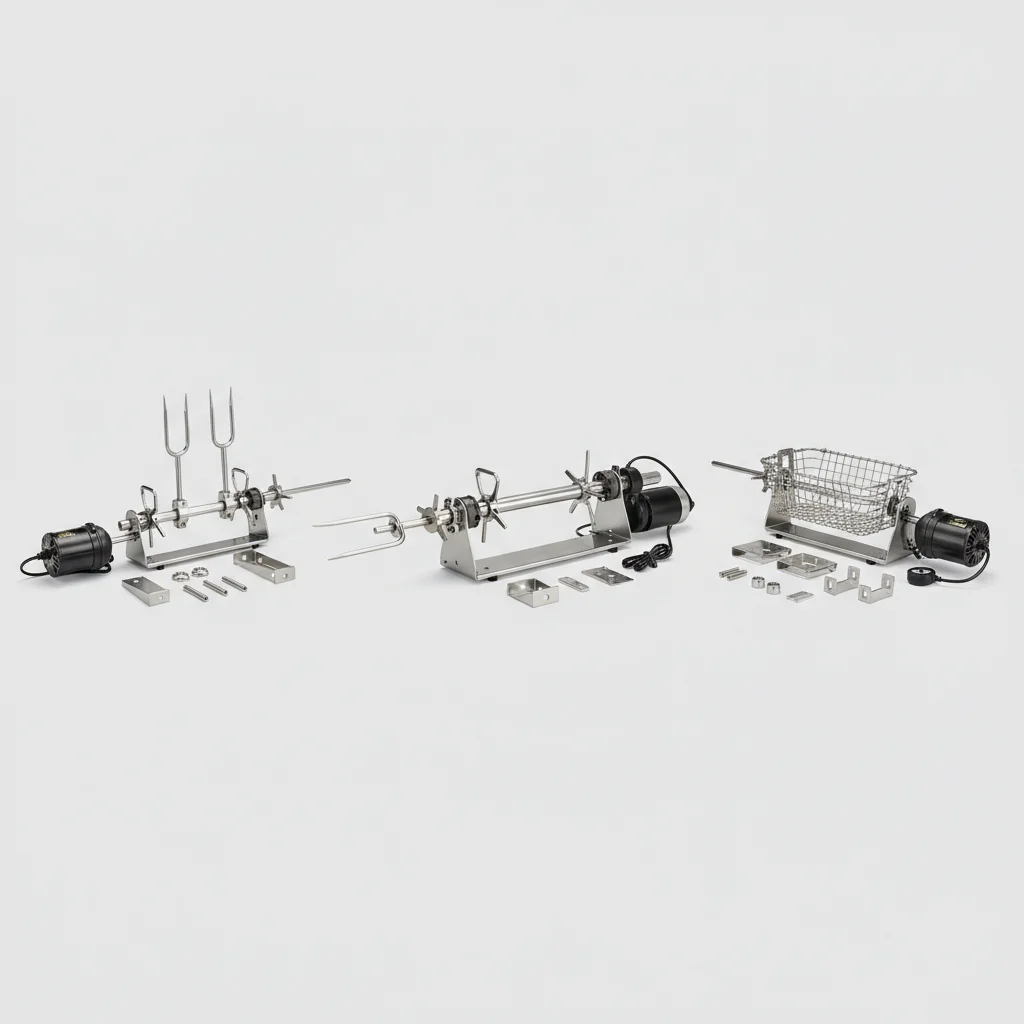
Choosing the right gas grill rotisserie kit can significantly upgrade your outdoor cooking, allowing for perfectly roasted meats with minimal effort. There are typically three main types of rotisserie kits available: universal kits, brand-specific kits, and heavy-duty kits. Each offers distinct advantages depending on your grill model and cooking needs. For optimal results, a kit with a powerful motor and a sturdy spit rod is essential to handle various meat sizes and ensure consistent rotation.
Universal rotisserie kits are designed to fit a wide range of gas grills, making them a versatile option if you’re unsure about your grill’s exact specifications or if you own multiple grills. These kits often come with adjustable brackets and various spit rod lengths to accommodate different grill widths. While convenient, it’s crucial to verify compatibility with your specific grill model to avoid any fitting issues. Look for kits that explicitly state their compatibility range and include all necessary mounting hardware.
Understanding Rotisserie Kit Components
A standard gas grill rotisserie kit comprises several key components: the motor, the spit rod, forks, and mounting brackets. The motor is the heart of the system, responsible for rotating the spit rod. Motors vary in power, measured in pounds of capacity, and can be battery-operated or electric. Electric motors generally offer more consistent power and are preferred for heavier roasts. The spit rod, typically made of stainless steel, holds the meat and must be strong enough to prevent bending under weight. Forks secure the meat to the spit, ensuring even rotation and preventing slippage during cooking.
Mounting brackets attach the motor and the spit rod to your grill. These can be universal or designed for specific grill brands. Ensure the brackets are robust and can securely hold the motor and spit rod in place, even with a heavy load. Some kits also include counterweights, which are invaluable for balancing unevenly shaped roasts, preventing strain on the motor, and promoting smoother rotation. Without proper balance, the motor can struggle, leading to inconsistent cooking and potential damage.
Choosing the Right Motor Power
The motor’s power is a critical factor when selecting a rotisserie kit. Most motors are rated for a maximum weight capacity, ranging from 10 to 50 pounds. For typical backyard grilling of chickens, small roasts, or pork shoulders, a motor with a 15-25 pound capacity is usually sufficient. However, if you plan to roast larger items like whole turkeys or multiple roasts simultaneously, a heavy-duty motor with a 30-50 pound capacity is highly recommended. Overloading the motor can lead to premature failure and uneven cooking.
Consider whether you prefer an electric or battery-operated motor. Electric motors offer continuous power as long as they are plugged in, making them ideal for long cooking sessions. Battery-operated motors provide portability and are great for situations where an electrical outlet isn’t readily available, such as camping or tailgating. However, battery life can be a concern for extended cooking, so having spare batteries or a power bank is advisable.
Installation and Setup Tips
|
Our Picks for the Best Gas Grill in 2026
As an Amazon Associate I earn from qualifying purchases.
|
||
| Num | Product | Action |
|---|---|---|
| 1 | Monument Grills 4 Burner Propane Gas Grill, Stainless Steel Outdoor Patio Barbecue Grill, with Broil Zone Fast Heating, Knob Control, and Easy Cleanup, M410MBZ |

|
| 2 | 2 Burner Propane Gas Grill with 26,500 BTUs Output, Porcelain-Enamel Main Body and Lid, Propane BBQ Grill with Warming Rack & Side Tables for Patio, Backyard, Poolside Gatherings |
|
| 3 | Endark 3-burner Propane Gas Grill | 37,000 BTU Stainless Steel with Side-iFre Function | with Enameled Cast Iron Grate,Thermometer and Side Stand Wheels | Great for Patio and Garden Outdoor Cooking |
|
| 4 | GasOne GP-1030S One 3 Burner Stainless Steel– Outdoor Cabinet Style with Wheels-High-Temperature Paint Coating Gas BBQ Grill – Elegant and Luxurious Design, Black |
|
| 5 | R.W.FLAME 4-Burner Propane Gas Grill with Side Burner, Stainless Steel Propane Grill 42000BTU for Outdoor Cooking, with Porcelain-Enameled Cast Iron Grates, Baking Pan, Silver |
|
| 6 | Tabletop Gas Grill 3-Burner, 22-inch Portable Propane Grill, 30,000 BTUs Stainless Steel Grill with Foldable Legs, Ideal for BBQ, Camping, Patio, Backyard, Tailgate, and Holiday Gatherings |
|
| 7 | Black Portable Gas Grill, Dual 10,000 BTU Burners, 275 Sq.In Cooking Space, Push-to-Start Ignition, Wind-Proof Lid with Built-in Thermometer, Perfect for Camping Tailgates & Backyard BBQ Cookouts |
|
| 8 | Cuisinart Chef's Style Tabletop Portable Propane Grill, 20,000 BTU Stainless Steel 2-Burner Outdoor Gas Grill for Camping, Tailgates, BBQ, Hassle-Free Setup, Twist-Start Ignition, CGG-306 |
|
| 9 | WAA Portable Propane Griddle, Tabletop Portable Propane Gas Grill, Stainless Steel Flat Top Grill, Outdoor Cooking for Tailgating,Camping, RVs, BBQ, Patio, Silver (3-Burner-2) |
|
| 10 | Endark 4-burner propane gas grill | Stainless steel construction | Dual side racks and wheels | Designed for patio, garden, and backyard cooking |
|
Installing a gas grill rotisserie kit is generally straightforward, but proper setup is crucial for optimal performance. First, ensure your grill is clean and free of any debris. Attach the mounting brackets to your grill according to the manufacturer’s instructions. Slide the spit rod through the meat, securing it with the forks. It’s often helpful to truss the meat with butcher’s twine to maintain its shape and prevent loose parts from dragging. Balance the meat on the spit rod as evenly as possible; a counterweight can assist with this.
- Read your grill and rotisserie kit manuals thoroughly before installation.
- Ensure all components are securely fastened to prevent wobbling.
- Test the motor’s rotation with a light load before adding meat.
- Use a drip pan underneath the meat to catch juices and prevent flare-ups.
- Monitor the internal temperature of your roast with a reliable meat thermometer.
Once the meat is secured and balanced, insert the spit rod into the motor and the support bracket on the opposite side. Turn on the motor and allow the meat to rotate. Adjust your grill’s burners to achieve the desired cooking temperature, typically using indirect heat. Keep the grill lid closed as much as possible to maintain consistent heat and prevent heat loss. Regular basting can help keep the meat moist and flavorful throughout the cooking process.
Maintenance and Longevity
Proper maintenance of your gas grill rotisserie kit will ensure its longevity and continued performance. After each use, allow the spit rod and forks to cool completely before cleaning. Most stainless steel components can be washed with warm, soapy water and a non-abrasive sponge. Avoid harsh chemicals or abrasive scrubbers that could damage the finish. The motor should be wiped clean with a damp cloth; never submerge it in water.
Store your rotisserie kit in a dry, protected area when not in use. Many kits come with a storage bag or case, which helps protect the components from dust and moisture. Periodically check the motor’s power cord for any signs of wear or damage. If you notice any issues, replace the cord or the motor as needed. With proper care, a quality gas grill rotisserie kit can provide years of delicious, evenly roasted meals.Investing in a durable kit from a reputable brand will pay off in the long run, offering consistent performance and delicious results for all your outdoor cooking adventures.

I finally pulled the trigger on a heavy-duty rotisserie kit after reading about the different types. My old universal one just couldn’t handle a full chicken without struggling. This new one, with its powerful motor, makes such a difference! The meat comes out so much more evenly cooked and juicy. Definitely worth the investment for anyone serious about their outdoor roasting.
I was on the fence about getting a brand-specific kit for my Weber, but I’m glad I did. The fit is perfect, and I don’t have to worry about any wobbling. The sturdy spit rod mentioned in the guide really does make a difference for larger roasts. My only minor gripe is that the initial setup took a little longer than I expected, but once it’s on, it’s fantastic.
This guide really helped me understand the importance of a good motor. My previous rotisserie would sometimes stall with a heavier turkey, leading to uneven cooking. I upgraded to a kit with a much stronger motor, and now everything rotates smoothly. The results are consistently amazing, and cleanup is surprisingly easy too.
I picked up a universal rotisserie kit hoping it would fit my older Char-Broil grill. While it technically works, the adjustable brackets feel a bit flimsy when I’m doing a bigger cut of meat. It gets the job done for smaller items, but I wish I’d paid more attention to the advice about verifying compatibility. Next time, I’ll probably go for something more robust.