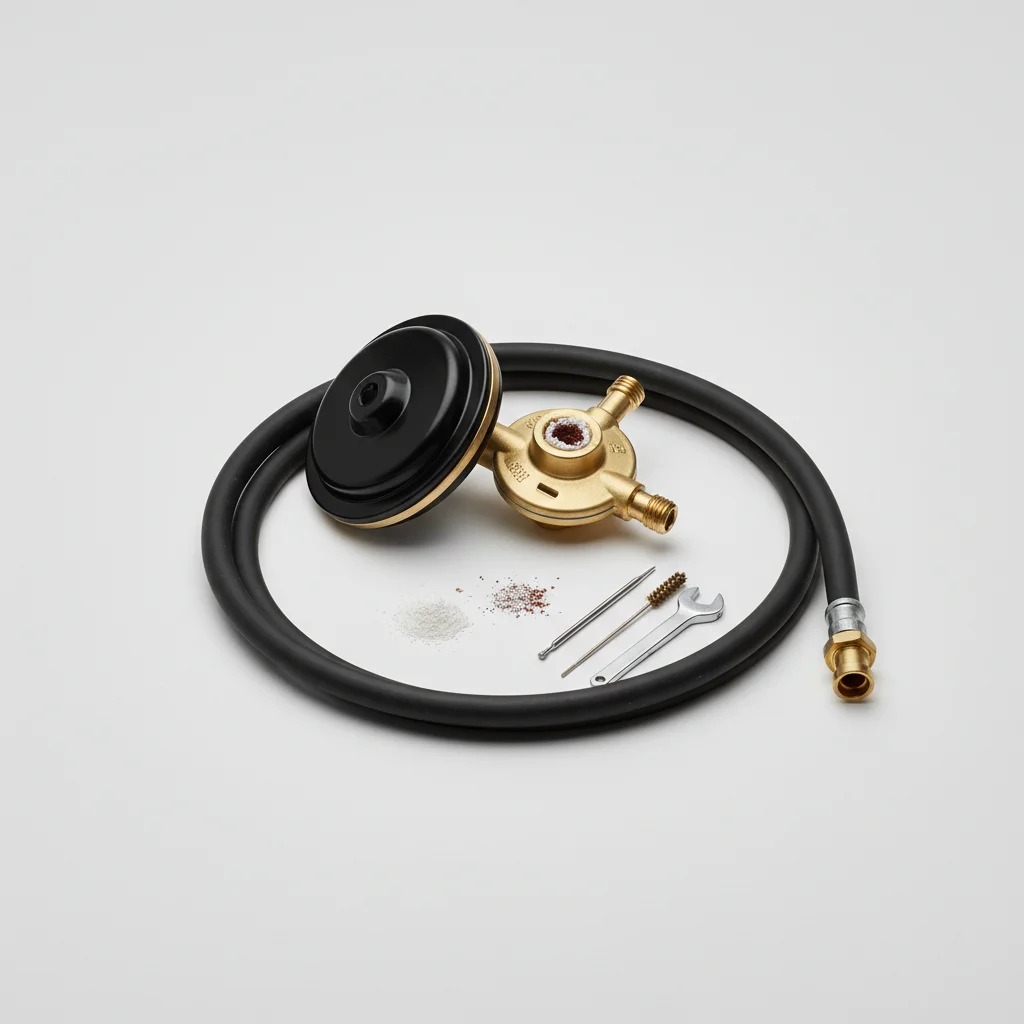
Gas grill regulator problems often manifest as a frustratingly low flame, preventing your grill from reaching optimal cooking temperatures. Typically, this issue stems from a tripped safety device within the regulator, which can be reset in a few simple steps. Understanding how to identify and resolve these common regulator malfunctions can save you time and ensure your grilling sessions are consistently successful.
Understanding Your Gas Grill Regulator
The regulator is a crucial component that controls the flow of propane from the tank to the grill burners, maintaining a safe and consistent pressure. It’s designed with a safety mechanism that can trip if it detects a sudden surge in gas flow, such as when the tank valve is opened too quickly. This safety feature, while important, is the most common cause of perceived ‘regulator problems’ when in fact the regulator itself isn’t faulty, just in a tripped state. For gas grill buying guides on this site.
A properly functioning regulator ensures your grill operates at its intended heat output. If you notice a significantly reduced flame, even with a full propane tank, the regulator is the first place to investigate. It’s important to differentiate between a tripped regulator and a truly defective one, as the former is easily fixable.
How to Reset a Tripped Gas Grill Regulator
Resetting a tripped regulator is a straightforward process that can often resolve low flame issues. First, ensure all burner control knobs on your grill are in the OFF position. Next, close the propane tank valve completely. Disconnect the regulator from the propane tank. Wait for at least 5 minutes to allow any residual pressure to dissipate. Reconnect the regulator to the propane tank, ensuring a snug fit. Slowly open the propane tank valve all the way, taking about 10-15 seconds to do so. Finally, open one burner control knob to the high setting and attempt to light the grill. If the flame is strong, the regulator has been successfully reset.
Signs of a Truly Faulty Gas Grill Regulator
|
Our Picks for the Best Gas Grill in 2026
As an Amazon Associate I earn from qualifying purchases.
|
||
| Num | Product | Action |
|---|---|---|
| 1 | Endark 4-burner propane gas grill | Stainless steel construction | Dual side racks and wheels | Designed for patio, garden, and backyard cooking |

|
| 2 | Monument Grills 4 Burner Propane Gas Grill, Stainless Steel Outdoor Patio Barbecue Grill, with Broil Zone Fast Heating, Knob Control, and Easy Cleanup, M410MBZ |
|
| 3 | GasOne GP-1030S One 3 Burner Stainless Steel– Outdoor Cabinet Style with Wheels-High-Temperature Paint Coating Gas BBQ Grill – Elegant and Luxurious Design, Black |
|
| 4 | R.W.FLAME 4-Burner Propane Gas Grill with Side Burner, Stainless Steel Propane Grill 42000BTU for Outdoor Cooking, with Porcelain-Enameled Cast Iron Grates, Baking Pan, Silver |
|
| 5 | Black Portable Gas Grill, Dual 10,000 BTU Burners, 275 Sq.In Cooking Space, Push-to-Start Ignition, Wind-Proof Lid with Built-in Thermometer, Perfect for Camping Tailgates & Backyard BBQ Cookouts |
|
| 6 | Cuisinart Chef's Style Tabletop Portable Propane Grill, 20,000 BTU Stainless Steel 2-Burner Outdoor Gas Grill for Camping, Tailgates, BBQ, Hassle-Free Setup, Twist-Start Ignition, CGG-306 |
|
| 7 | Endark 3-burner Propane Gas Grill | 37,000 BTU Stainless Steel with Side-iFre Function | with Enameled Cast Iron Grate,Thermometer and Side Stand Wheels | Great for Patio and Garden Outdoor Cooking |
|
| 8 | WAA Portable Propane Griddle, Tabletop Portable Propane Gas Grill, Stainless Steel Flat Top Grill, Outdoor Cooking for Tailgating,Camping, RVs, BBQ, Patio, Silver (3-Burner-2) |
|
| 9 | Tabletop Gas Grill 3-Burner, 22-inch Portable Propane Grill, 30,000 BTUs Stainless Steel Grill with Foldable Legs, Ideal for BBQ, Camping, Patio, Backyard, Tailgate, and Holiday Gatherings |
|
| 10 | 2 Burner Propane Gas Grill with 26,500 BTUs Output, Porcelain-Enamel Main Body and Lid, Propane BBQ Grill with Warming Rack & Side Tables for Patio, Backyard, Poolside Gatherings |
|
While most low flame issues are due to a tripped safety mechanism, there are instances where the regulator itself might be faulty and require replacement. Signs of a truly faulty regulator include a persistent low flame even after multiple reset attempts, a strong smell of gas near the regulator (indicating a leak), or visible damage to the regulator body or hose. If you suspect a leak, immediately turn off the gas supply and do not attempt to use the grill. A simple soap and water test can help confirm a leak: apply a soapy solution to the regulator and hose connections; if bubbles appear, there’s a leak.
- Persistent low flame after multiple resets.
- Strong smell of propane near the regulator.
- Visible cracks or damage to the regulator body or hose.
- Hissing sound from the regulator when the tank valve is open.
- Inability to light the grill at all, despite a full tank.
When to Replace Your Gas Grill Regulator
If troubleshooting steps do not resolve your low flame issues, or if you observe any signs of a faulty regulator, replacement is the next logical step. Replacing a gas grill regulator is a relatively simple DIY task that can restore your grill’s performance. Always ensure you purchase a regulator that is compatible with your specific grill model and propane tank type. Most regulators are designed for standard QCC1 connections, but it’s always best to double-check your grill’s manual for exact specifications.
When installing a new regulator, always follow the manufacturer’s instructions carefully. Ensure all connections are tight and perform a leak test before using the grill. Regular inspection of your regulator and hose for any signs of wear or damage can prevent future problems and ensure safe grilling.
Preventing Regulator Issues
To minimize the chances of your gas grill regulator tripping or failing, always open the propane tank valve slowly when starting your grill. This allows the gas pressure to equalize gradually, preventing the safety mechanism from engaging. Additionally, store your grill in a protected area to prevent environmental damage to the regulator and hose. Periodically check the hose for kinks, cracks, or abrasions, and replace it if any damage is found. Proper maintenance and careful operation are key to a long-lasting and trouble-free grilling experience.
