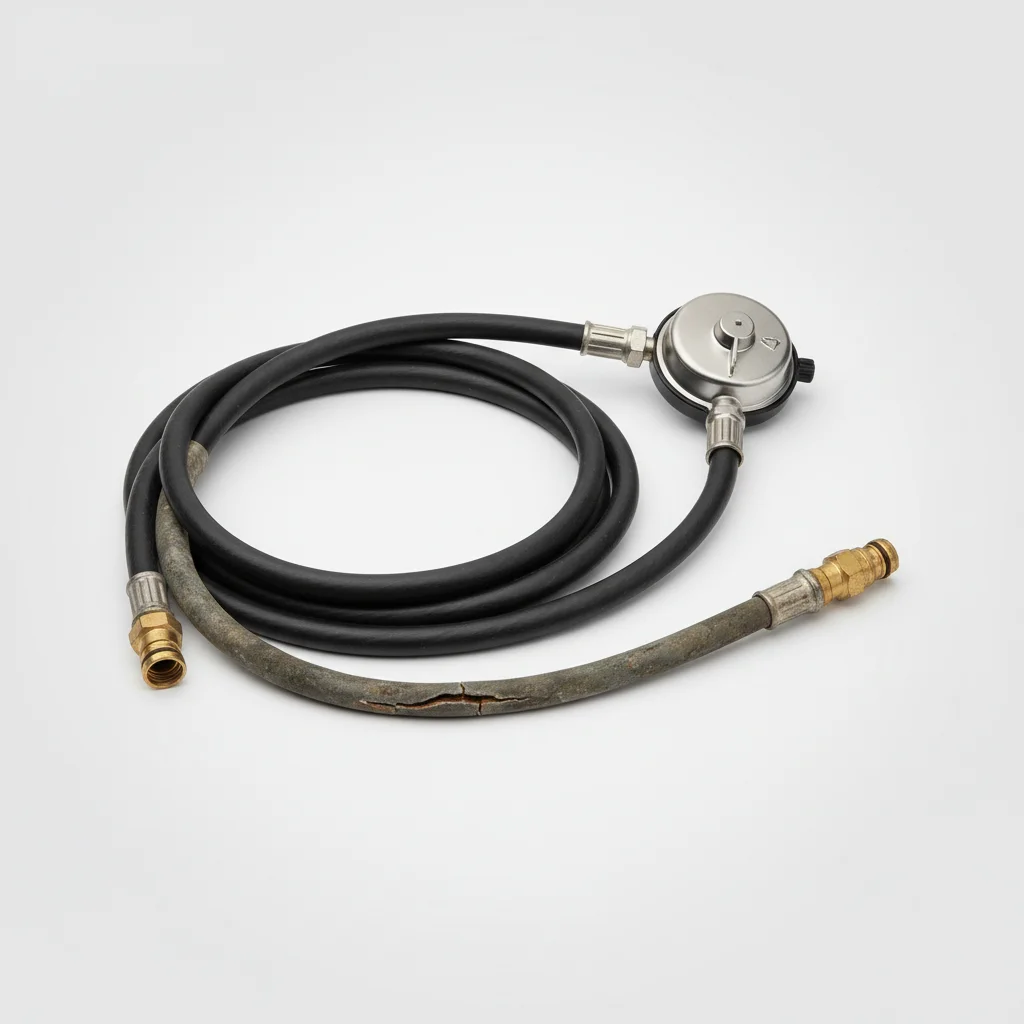
Knowing when to perform a gas grill hose replacement is crucial for safety and optimal performance. Generally, you should replace your gas grill hose every 3 to 5 years, or immediately if you notice any signs of wear, damage, or leaks. This proactive approach prevents potential hazards like gas leaks and ensures your grilling sessions remain safe and enjoyable.
Why Regular Hose Replacement Matters
The gas grill hose is a vital component that transports propane or natural gas from the tank or supply line to your grill’s burners. Over time, exposure to elements like UV rays, extreme temperatures, and general wear and tear can degrade the hose material. Cracks, brittleness, or abrasions can develop, leading to dangerous gas leaks. A compromised hose not only poses a fire hazard but can also affect the grill’s performance by restricting gas flow.
Regular inspection and timely replacement are simple yet effective measures to maintain a safe grilling environment. Neglecting this can lead to serious accidents, making it a non-negotiable part of your grill maintenance routine.
Signs It’s Time for a New Gas Grill Hose
Beyond the general 3-5 year guideline, several specific indicators signal an immediate need for gas grill hose replacement. Visually inspect the hose for any visible cracks, fraying, or hardening of the rubber. A hose that feels stiff or brittle to the touch is likely compromised. Another critical sign is a strong smell of gas, which indicates a leak. You can also perform a soap and water test: apply a soapy solution to the hose while the gas is on (but the grill is off) and look for bubbles, which confirm a leak.
- Visible cracks, fraying, or abrasions on the hose surface.
- Hose feels stiff, brittle, or unusually soft.
- Strong smell of gas near the hose or tank connection.
- Bubbles appearing during a soap and water leak test.
- Damage from pests, kinks, or accidental cuts.
Choosing the Right Replacement Hose
|
Our Picks for the Best Gas Grill in 2026
As an Amazon Associate I earn from qualifying purchases.
|
||
| Num | Product | Action |
|---|---|---|
| 1 | Black Portable Gas Grill, Dual 10,000 BTU Burners, 275 Sq.In Cooking Space, Push-to-Start Ignition, Wind-Proof Lid with Built-in Thermometer, Perfect for Camping Tailgates & Backyard BBQ Cookouts |

|
| 2 | R.W.FLAME 4-Burner Propane Gas Grill with Side Burner, Stainless Steel Propane Grill 42000BTU for Outdoor Cooking, with Porcelain-Enameled Cast Iron Grates, Baking Pan, Silver |
|
| 3 | Endark 3-burner Propane Gas Grill | 37,000 BTU Stainless Steel with Side-iFre Function | with Enameled Cast Iron Grate,Thermometer and Side Stand Wheels | Great for Patio and Garden Outdoor Cooking |
|
| 4 | Endark 4-burner propane gas grill | Stainless steel construction | Dual side racks and wheels | Designed for patio, garden, and backyard cooking |
|
| 5 | WAA Portable Propane Griddle, Tabletop Portable Propane Gas Grill, Stainless Steel Flat Top Grill, Outdoor Cooking for Tailgating,Camping, RVs, BBQ, Patio, Silver (3-Burner-2) |
|
| 6 | GasOne GP-1030S One 3 Burner Stainless Steel– Outdoor Cabinet Style with Wheels-High-Temperature Paint Coating Gas BBQ Grill – Elegant and Luxurious Design, Black |
|
| 7 | 2 Burner Propane Gas Grill with 26,500 BTUs Output, Porcelain-Enamel Main Body and Lid, Propane BBQ Grill with Warming Rack & Side Tables for Patio, Backyard, Poolside Gatherings |
|
| 8 | Monument Grills 4 Burner Propane Gas Grill, Stainless Steel Outdoor Patio Barbecue Grill, with Broil Zone Fast Heating, Knob Control, and Easy Cleanup, M410MBZ |
|
| 9 | Tabletop Gas Grill 3-Burner, 22-inch Portable Propane Grill, 30,000 BTUs Stainless Steel Grill with Foldable Legs, Ideal for BBQ, Camping, Patio, Backyard, Tailgate, and Holiday Gatherings |
|
| 10 | Cuisinart Chef's Style Tabletop Portable Propane Grill, 20,000 BTU Stainless Steel 2-Burner Outdoor Gas Grill for Camping, Tailgates, BBQ, Hassle-Free Setup, Twist-Start Ignition, CGG-306 |
|
When selecting a replacement gas grill hose, it’s essential to choose one that is compatible with your grill’s fuel type (propane or natural gas) and connections. Most propane grills use a standard Type 1 (QCC1) connector for the tank and a specific fitting for the grill’s regulator. Natural gas grills will have different connection types. Always refer to your grill’s owner’s manual for the exact specifications and recommended replacement parts. Opt for hoses made from durable, weather-resistant materials designed for outdoor use.
Consider the length of the hose as well; it should be long enough to allow for safe placement of the gas tank or connection without being excessively long, which could create a tripping hazard or unnecessary coiling. A good quality hose will often feature brass fittings for corrosion resistance and a robust outer layer for protection against environmental damage.
Step-by-Step Replacement Process
Replacing a gas grill hose is a straightforward process that most grill owners can perform. First, ensure your gas tank is completely shut off and disconnected, or the natural gas supply is turned off at the source. Use a wrench to carefully loosen and remove the old hose from both the tank/supply line and the grill’s regulator. Be mindful of any residual gas pressure. Once the old hose is removed, attach the new hose, ensuring all connections are tight but not overtightened.
After installation, always perform a leak test with soapy water before lighting your grill. This crucial step confirms that all connections are secure and there are no leaks. If bubbles appear, tighten the connections further and retest. If leaks persist, do not use the grill and consult a professional.
Extending the Life of Your Gas Grill Hose
While regular replacement is necessary, you can extend the life of your gas grill hose with proper care. Store your grill in a covered area or use a grill cover to protect the hose from direct sunlight and harsh weather conditions. Avoid kinking or bending the hose sharply, as this can create weak points. Keep the area around the hose free of debris and pests that could chew through the material. Periodically clean the hose with mild soap and water to remove dirt and grime, which can contribute to material degradation. Regular inspections, even outside the replacement schedule, can help you catch minor issues before they become major problems.

I’m so glad I read this! I’ve had my grill for about 4 years and never even thought about replacing the hose. After checking it, I found a small crack near the tank connection. Ordered a new one right away and feel much safer grilling now. It’s a small thing but makes a huge difference for peace of mind.
Good information overall, but I wish there was more specific guidance on different hose materials. I have a natural gas line and wasn’t sure if the same replacement frequency applies. It mostly focused on propane tanks. Still, it got me to inspect my hose, which is a plus.
Excellent advice! I had a scare last summer with a small gas leak and it turned out to be a brittle hose. I replaced it immediately, but this post really emphasizes the ‘proactive approach’ which is key. I’ll be adding hose inspection to my regular grill maintenance routine from now on.
This was a really helpful reminder. I usually just check for leaks with soapy water, but the advice about replacing every 3-5 years is something I hadn’t considered. My hose is probably 6 years old, so it’s definitely time for an upgrade. Thanks for the detailed info on why it matters.