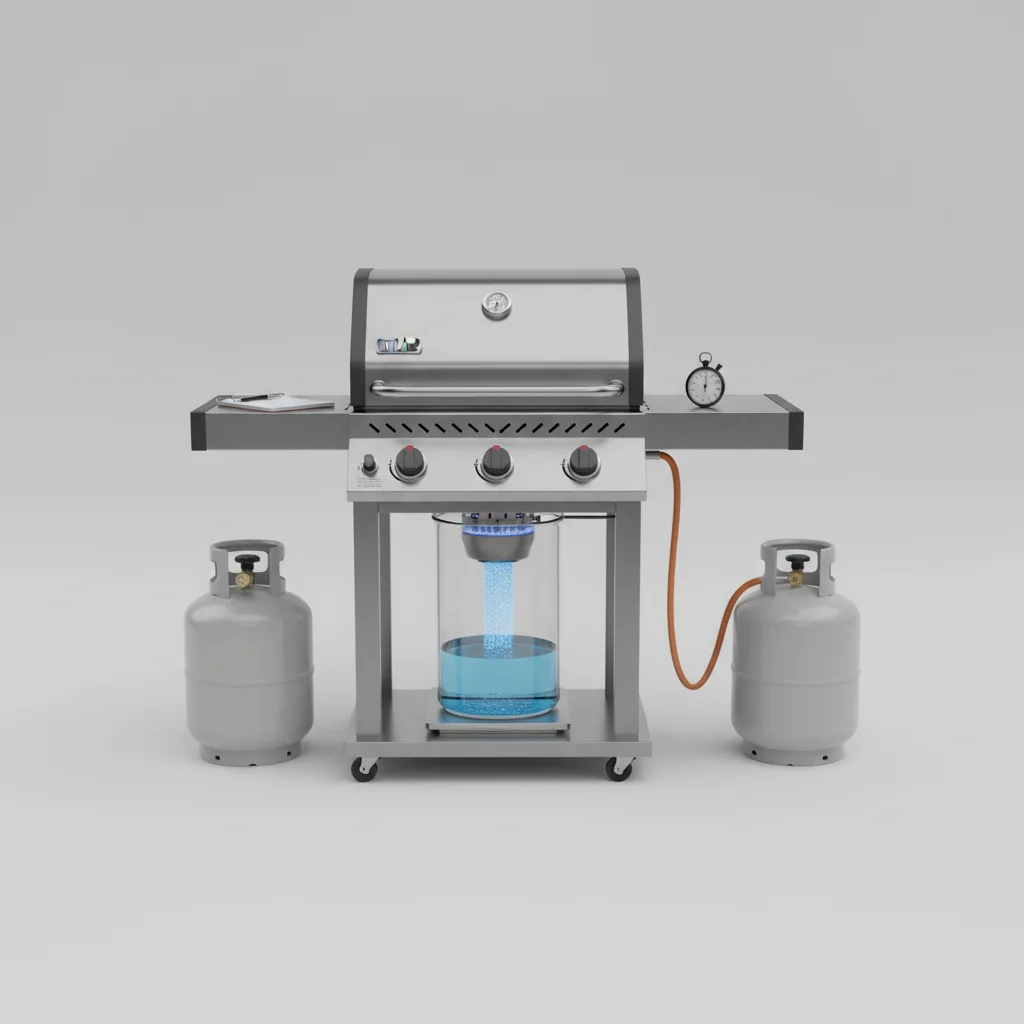
Understanding your gas grill’s fuel consumption is key to efficient outdoor cooking. On average, a standard 20-pound propane tank will last for approximately 10 to 12 grilling sessions, each lasting about an hour, when operating a medium-sized gas grill on medium heat. This translates to roughly 18-20 hours of total cooking time, though this can vary significantly based on grill size, burner output, and cooking temperature.
Factors Influencing Gas Grill Fuel Consumption
Several factors directly impact how quickly your gas grill consumes propane. The most significant is the BTU (British Thermal Unit) rating of your grill. Higher BTU grills, often found in larger models with more burners, will naturally use more fuel to achieve and maintain temperature. For instance, a grill with a total output of 40,000 BTUs will consume propane at a faster rate than a 25,000 BTU model. Additionally, the number of burners you operate simultaneously and the desired cooking temperature play a crucial role. Grilling at high heat for extended periods will deplete your tank much faster than low-and-slow cooking. For compare top gas grill on this site.
Ambient weather conditions also affect fuel efficiency. On a cold, windy day, your grill will need to work harder and consume more fuel to maintain its internal temperature compared to grilling on a warm, calm day. The condition of your grill components, such as clean burner tubes and well-maintained grates, can also indirectly influence efficiency by ensuring even heat distribution and reducing the need for excessive heat settings.
Calculating Your Grill’s Propane Usage Rate
To get a more precise idea of your grill’s propane usage, you can perform a simple calculation. A standard 20-pound propane tank contains approximately 4.7 gallons of liquid propane. One gallon of propane contains about 91,500 BTUs. Therefore, a full 20-pound tank holds roughly 430,000 BTUs of energy. If your grill has a total BTU output of 40,000 BTUs per hour, you can expect the tank to last approximately 10.75 hours (430,000 BTUs / 40,000 BTUs/hour). This calculation provides a theoretical maximum; real-world usage will vary.
It’s also helpful to monitor your tank’s weight. A full 20-pound tank typically weighs around 37 pounds (20 pounds of propane + 17 pounds for the empty tank). By weighing your tank periodically, you can estimate how much fuel remains and plan your grilling sessions accordingly. Many modern grills also come with built-in fuel gauges, offering a convenient visual indicator of propane levels.
Tips for Maximizing Propane Efficiency
|
Our Picks for the Best Gas Grill in 2026
As an Amazon Associate I earn from qualifying purchases.
|
||
| Num | Product | Action |
|---|---|---|
| 1 | Black Portable Gas Grill, Dual 10,000 BTU Burners, 275 Sq.In Cooking Space, Push-to-Start Ignition, Wind-Proof Lid with Built-in Thermometer, Perfect for Camping Tailgates & Backyard BBQ Cookouts |

|
| 2 | Endark 4-burner propane gas grill | Stainless steel construction | Dual side racks and wheels | Designed for patio, garden, and backyard cooking |
|
| 3 | 2 Burner Propane Gas Grill with 26,500 BTUs Output, Porcelain-Enamel Main Body and Lid, Propane BBQ Grill with Warming Rack & Side Tables for Patio, Backyard, Poolside Gatherings |
|
| 4 | Tabletop Gas Grill 3-Burner, 22-inch Portable Propane Grill, 30,000 BTUs Stainless Steel Grill with Foldable Legs, Ideal for BBQ, Camping, Patio, Backyard, Tailgate, and Holiday Gatherings |
|
| 5 | GasOne GP-1030S One 3 Burner Stainless Steel– Outdoor Cabinet Style with Wheels-High-Temperature Paint Coating Gas BBQ Grill – Elegant and Luxurious Design, Black |
|
| 6 | Endark 3-burner Propane Gas Grill | 37,000 BTU Stainless Steel with Side-iFre Function | with Enameled Cast Iron Grate,Thermometer and Side Stand Wheels | Great for Patio and Garden Outdoor Cooking |
|
| 7 | R.W.FLAME 4-Burner Propane Gas Grill with Side Burner, Stainless Steel Propane Grill 42000BTU for Outdoor Cooking, with Porcelain-Enameled Cast Iron Grates, Baking Pan, Silver |
|
| 8 | Cuisinart Chef's Style Tabletop Portable Propane Grill, 20,000 BTU Stainless Steel 2-Burner Outdoor Gas Grill for Camping, Tailgates, BBQ, Hassle-Free Setup, Twist-Start Ignition, CGG-306 |
|
| 9 | Monument Grills 4 Burner Propane Gas Grill, Stainless Steel Outdoor Patio Barbecue Grill, with Broil Zone Fast Heating, Knob Control, and Easy Cleanup, M410MBZ |
|
| 10 | WAA Portable Propane Griddle, Tabletop Portable Propane Gas Grill, Stainless Steel Flat Top Grill, Outdoor Cooking for Tailgating,Camping, RVs, BBQ, Patio, Silver (3-Burner-2) |
|
- Preheat Smartly: Only preheat your grill for the recommended 10-15 minutes. Over-preheating wastes fuel.
- Keep the Lid Closed: Every time you open the lid, heat escapes, and your grill has to work harder to recover the temperature, using more propane.
- Clean Your Grill Regularly: Grease and food debris can block burner ports, leading to inefficient burning. Clean burners ensure optimal heat transfer.
- Use Indirect Heat When Possible: For larger cuts of meat or longer cooks, consider using indirect heat. This often requires fewer burners, saving fuel.
- Consider a Fuel Gauge: Invest in an external propane tank gauge if your grill doesn’t have one. This helps you avoid running out of gas mid-cook.
When to Refill or Replace Your Propane Tank
Knowing when to refill or replace your propane tank is crucial for uninterrupted grilling. Most grillers opt to refill their tanks when they are about one-quarter full, preventing unexpected run-outs. You can check the level by pouring warm water down the side of the tank; the water will feel cool where the liquid propane is, indicating the fill line. Alternatively, a simple tank scale or gauge provides a more accurate reading.
Propane tanks also have a certification date stamped on the collar, typically valid for 10 or 12 years from the date of manufacture. After this period, the tank must be re-certified by a qualified professional or replaced. Using an expired tank is unsafe and many refill stations will refuse to fill it. Always inspect your tank for any signs of damage, rust, or leaks before use.
Propane Tank Storage and Safety
Proper storage of your propane tank is just as important as understanding its consumption. Always store propane tanks upright in a well-ventilated outdoor area, away from direct sunlight, heat sources, and ignition sources. Never store a propane tank indoors, in a garage, or in an enclosed space, as this can pose a significant safety hazard. Ensure the tank valve is tightly closed when not in use and that the protective cap is in place.
When transporting a propane tank, always secure it in an upright position in your vehicle, preferably in the trunk or truck bed, to prevent it from tipping over. Avoid leaving tanks in a hot car for extended periods. Regularly check the hose and connections for any cracks or leaks using a soapy water solution; if bubbles appear, you have a leak that needs immediate attention.

The info on average tank life was useful, but I found that my grill, even on medium heat, seems to burn through a 20-pound tank a bit faster than the 10-12 sessions mentioned. Maybe it’s just my specific model, but I was hoping for a little more detail on troubleshooting if your consumption is higher than average. Still, good to have a baseline.
I always wondered how long my propane tank would actually last, and this really cleared it up. I have a 40,000 BTU grill, and the estimate of 18-20 hours of cooking time per 20-pound tank seems spot on for my usage. No more running out of gas mid-cookout! This info is super helpful for planning.
This was exactly what I needed! I’m new to gas grilling and was totally in the dark about how much propane I’d use. Knowing that a standard 20-pound tank lasts about 10-12 grilling sessions on a medium-sized grill gives me a much better idea of what to expect. Now I can confidently plan my summer cookouts without worrying about running out of fuel.
Great breakdown of fuel consumption. I’ve got a smaller grill, around 25,000 BTUs, and I definitely get more than 12 sessions out of my tank, which is a nice bonus. It’s good to know that the burner output really makes a difference. I appreciate understanding the factors that influence how quickly I go through propane.