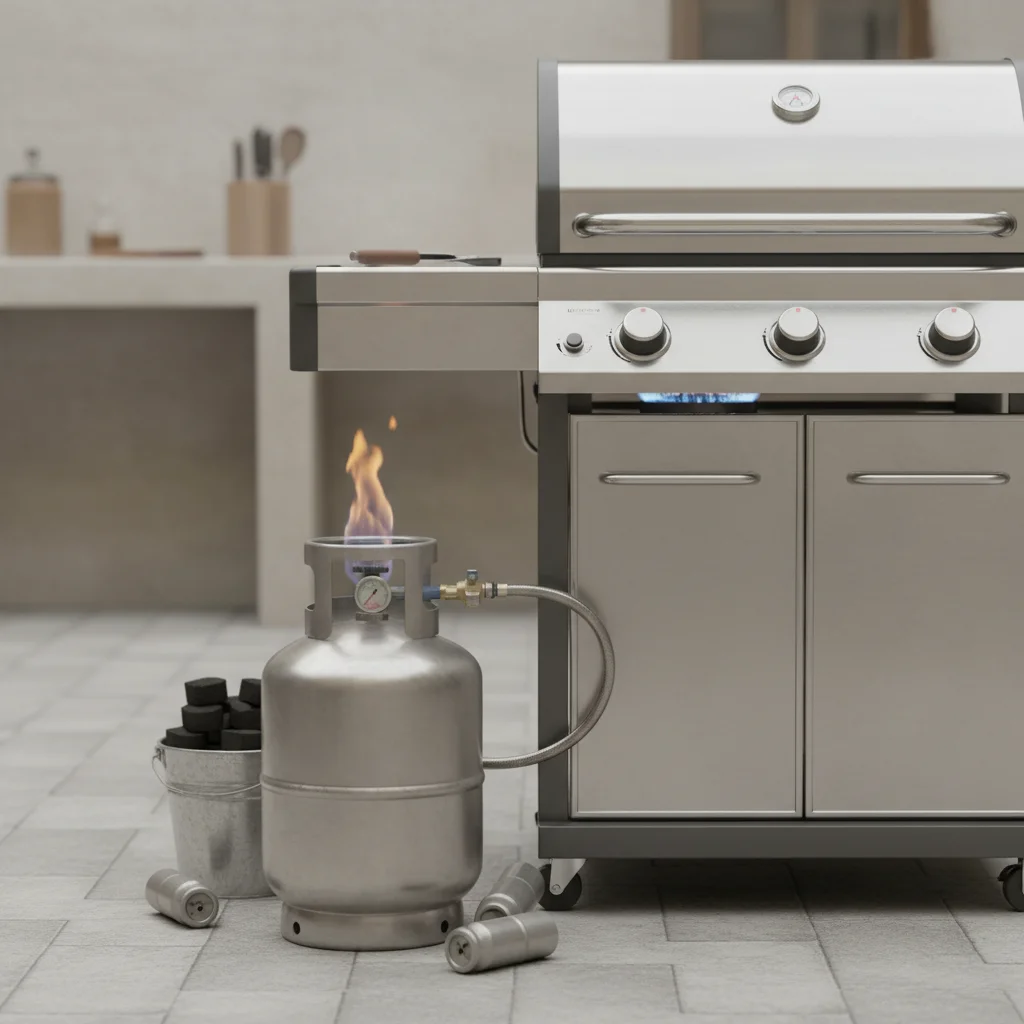
Understanding your gas grill’s fuel consumption is key to efficient grilling and avoiding mid-cook propane runs. On average, a standard 20-pound propane tank will last for approximately 10 to 25 hours of grilling, depending on the grill’s BTU output, the number of burners used, and the heat setting. This translates to roughly 1 to 2 pounds of propane consumed per hour for a typical four-burner grill operating at medium to high heat.
Factors Influencing Propane Usage
Several variables directly impact how quickly your gas grill consumes propane. The most significant factor is the grill’s total BTU (British Thermal Unit) output. Higher BTU grills, designed for more intense heat, will naturally burn through fuel faster. The number of burners you engage and the heat level you set them to also play a crucial role. Grilling on high heat with all burners active will deplete a tank much faster than low-heat cooking with only one or two burners. For more gas grill guides on this site.
Ambient temperature can also affect fuel efficiency. Grilling in colder weather requires the grill to work harder to maintain temperature, leading to increased propane consumption. Wind can also be a factor, as it can draw heat away from the cooking surface, forcing the burners to compensate.
Calculating Your Grill’s Propane Burn Rate
To get a more precise estimate of your grill’s propane consumption, you can perform a simple calculation. Most propane tanks hold 20 pounds of propane. You’ll need to know your grill’s total BTU output, which is usually listed in the owner’s manual or on a label on the grill itself. Propane has an energy content of approximately 21,591 BTUs per pound. Divide your grill’s total BTU output by this number to get an approximate pounds-per-hour consumption rate. For example, a 40,000 BTU grill would consume roughly 1.85 pounds of propane per hour (40,000 BTU / 21,591 BTU/lb).
Tips for Maximizing Propane Efficiency
|
Our Picks for the Best Gas Grill in 2026
As an Amazon Associate I earn from qualifying purchases.
|
||
| Num | Product | Action |
|---|---|---|
| 1 | Cuisinart Chef's Style Tabletop Portable Propane Grill, 20,000 BTU Stainless Steel 2-Burner Outdoor Gas Grill for Camping, Tailgates, BBQ, Hassle-Free Setup, Twist-Start Ignition, CGG-306 |

|
| 2 | Monument Grills 4 Burner Propane Gas Grill, Stainless Steel Outdoor Patio Barbecue Grill, with Broil Zone Fast Heating, Knob Control, and Easy Cleanup, M410MBZ |
|
| 3 | Black Portable Gas Grill, Dual 10,000 BTU Burners, 275 Sq.In Cooking Space, Push-to-Start Ignition, Wind-Proof Lid with Built-in Thermometer, Perfect for Camping Tailgates & Backyard BBQ Cookouts |
|
| 4 | WAA Portable Propane Griddle, Tabletop Portable Propane Gas Grill, Stainless Steel Flat Top Grill, Outdoor Cooking for Tailgating,Camping, RVs, BBQ, Patio, Silver (3-Burner-2) |
|
| 5 | 2 Burner Propane Gas Grill with 26,500 BTUs Output, Porcelain-Enamel Main Body and Lid, Propane BBQ Grill with Warming Rack & Side Tables for Patio, Backyard, Poolside Gatherings |
|
| 6 | Tabletop Gas Grill 3-Burner, 22-inch Portable Propane Grill, 30,000 BTUs Stainless Steel Grill with Foldable Legs, Ideal for BBQ, Camping, Patio, Backyard, Tailgate, and Holiday Gatherings |
|
| 7 | GasOne GP-1030S One 3 Burner Stainless Steel– Outdoor Cabinet Style with Wheels-High-Temperature Paint Coating Gas BBQ Grill – Elegant and Luxurious Design, Black |
|
| 8 | Endark 4-burner propane gas grill | Stainless steel construction | Dual side racks and wheels | Designed for patio, garden, and backyard cooking |
|
| 9 | R.W.FLAME 4-Burner Propane Gas Grill with Side Burner, Stainless Steel Propane Grill 42000BTU for Outdoor Cooking, with Porcelain-Enameled Cast Iron Grates, Baking Pan, Silver |
|
| 10 | Endark 3-burner Propane Gas Grill | 37,000 BTU Stainless Steel with Side-iFre Function | with Enameled Cast Iron Grate,Thermometer and Side Stand Wheels | Great for Patio and Garden Outdoor Cooking |
|
- Preheat Smartly: Only preheat your grill for the recommended 10-15 minutes. Over-preheating wastes fuel.
- Keep the Lid Closed: Every time you open the lid, heat escapes, and your grill has to work harder to regain temperature.
- Clean Your Grill Regularly: Clogged burners can lead to inefficient burning and wasted fuel.
- Use a Propane Gauge: A simple gauge can help you monitor your fuel levels and avoid unexpected run-outs.
- Cook in Batches: If possible, cook all items at once rather than multiple smaller sessions.
By understanding these factors and implementing efficient grilling practices, you can extend the life of your propane tank and enjoy more uninterrupted cooking sessions. Consider investing in a high-quality propane tank gauge for accurate readings.
When to Refill or Replace Your Propane Tank
Knowing when your propane tank is running low is crucial. Besides using a gauge, you can perform a simple water test: pour warm water down the side of the tank. The point where condensation forms or the tank feels cool to the touch indicates the propane level. It’s always a good idea to have a spare, full propane tank on hand, especially for longer grilling sessions or when entertaining. Many local hardware stores and gas stations offer propane exchange or refill services.
Regularly inspect your propane tank for any signs of damage or rust. A well-maintained tank is not only safer but also ensures optimal fuel delivery to your grill. For consistent performance, consider a reliable brand of propane.
