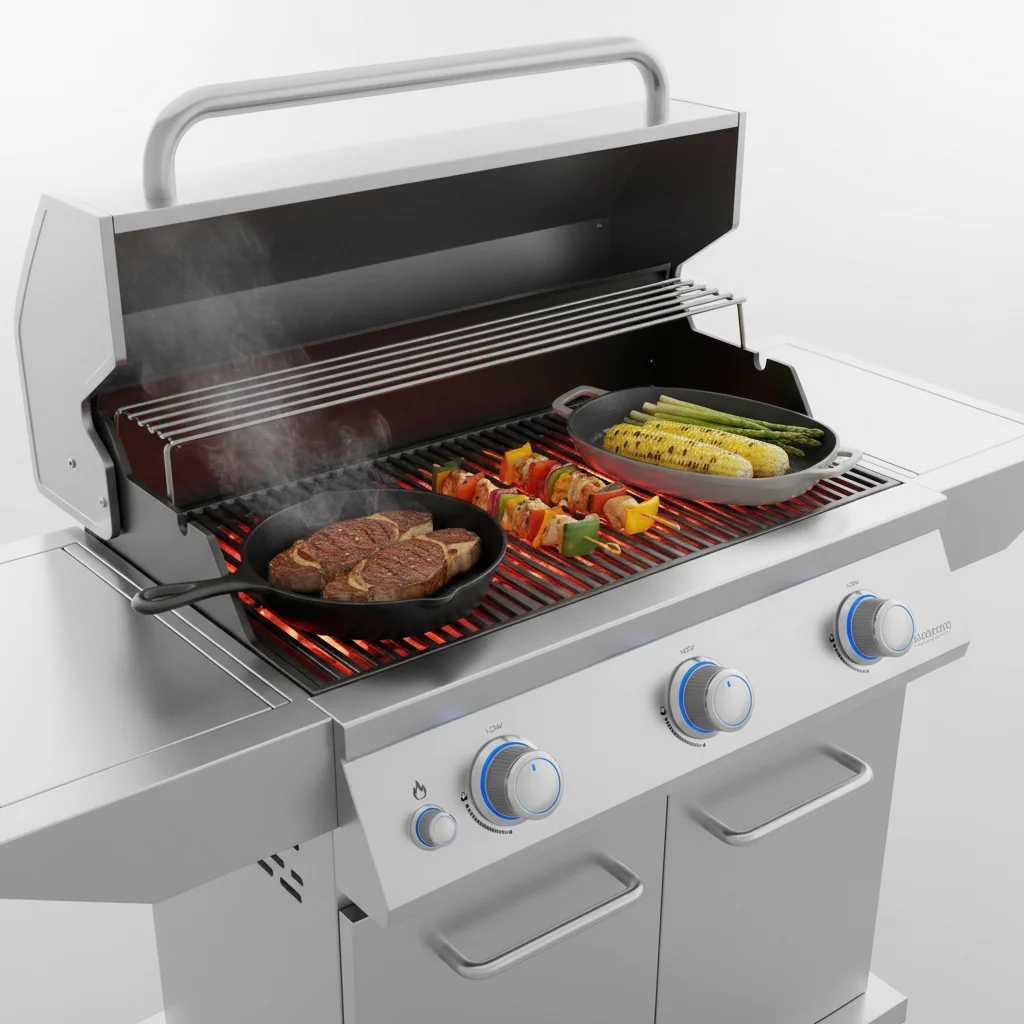
Understanding gas grill cooking zones is crucial for versatile and precise outdoor cooking. Most home gas grills feature between 2 and 6 cooking zones, each offering distinct temperature control for different culinary tasks. The ideal number of zones depends heavily on your grilling habits, the types of food you prepare, and the size of your typical gatherings.
What Are Gas Grill Cooking Zones?
Gas grill cooking zones refer to distinct areas on the grill grate that can be heated independently. Each zone typically corresponds to one or more burners, allowing you to create varying temperature environments across the cooking surface. This capability is essential for techniques like indirect grilling, searing, and keeping food warm without overcooking.
For instance, a 3-burner grill can easily create three zones: high heat for searing, medium heat for general cooking, and a low or off zone for indirect heat or warming. This flexibility is a game-changer for preparing complex meals that require different cooking temperatures simultaneously.
Benefits of Multiple Cooking Zones
Having multiple cooking zones offers significant advantages. Firstly, it allows for precise temperature management, preventing delicate foods from burning while thicker cuts cook through. Secondly, it enables indirect cooking, which is perfect for larger roasts, whole chickens, or ribs that benefit from slow, even heat without direct exposure to flames. Thirdly, it provides a warming area, ensuring all components of your meal are hot and ready to serve at the same time.
- Achieve perfect searing and slow roasting simultaneously.
- Prevent flare-ups by moving food to cooler zones.
- Keep cooked food warm without drying it out.
- Cook different types of food at their optimal temperatures.
- Enhance fuel efficiency by only heating necessary zones.
Choosing the Right Number of Zones
|
Our Picks for the Best Gas Grill in 2026
As an Amazon Associate I earn from qualifying purchases.
|
||
| Num | Product | Action |
|---|---|---|
| 1 | 2 Burner Propane Gas Grill with 26,500 BTUs Output, Porcelain-Enamel Main Body and Lid, Propane BBQ Grill with Warming Rack & Side Tables for Patio, Backyard, Poolside Gatherings |

|
| 2 | WAA Portable Propane Griddle, Tabletop Portable Propane Gas Grill, Stainless Steel Flat Top Grill, Outdoor Cooking for Tailgating,Camping, RVs, BBQ, Patio, Silver (3-Burner-2) |
|
| 3 | GasOne GP-1030S One 3 Burner Stainless Steel– Outdoor Cabinet Style with Wheels-High-Temperature Paint Coating Gas BBQ Grill – Elegant and Luxurious Design, Black |
|
| 4 | Tabletop Gas Grill 3-Burner, 22-inch Portable Propane Grill, 30,000 BTUs Stainless Steel Grill with Foldable Legs, Ideal for BBQ, Camping, Patio, Backyard, Tailgate, and Holiday Gatherings |
|
| 5 | Endark 4-burner propane gas grill | Stainless steel construction | Dual side racks and wheels | Designed for patio, garden, and backyard cooking |
|
| 6 | R.W.FLAME 4-Burner Propane Gas Grill with Side Burner, Stainless Steel Propane Grill 42000BTU for Outdoor Cooking, with Porcelain-Enameled Cast Iron Grates, Baking Pan, Silver |
|
| 7 | Endark 3-burner Propane Gas Grill | 37,000 BTU Stainless Steel with Side-iFre Function | with Enameled Cast Iron Grate,Thermometer and Side Stand Wheels | Great for Patio and Garden Outdoor Cooking |
|
| 8 | Monument Grills 4 Burner Propane Gas Grill, Stainless Steel Outdoor Patio Barbecue Grill, with Broil Zone Fast Heating, Knob Control, and Easy Cleanup, M410MBZ |
|
| 9 | Cuisinart Chef's Style Tabletop Portable Propane Grill, 20,000 BTU Stainless Steel 2-Burner Outdoor Gas Grill for Camping, Tailgates, BBQ, Hassle-Free Setup, Twist-Start Ignition, CGG-306 |
|
| 10 | Black Portable Gas Grill, Dual 10,000 BTU Burners, 275 Sq.In Cooking Space, Push-to-Start Ignition, Wind-Proof Lid with Built-in Thermometer, Perfect for Camping Tailgates & Backyard BBQ Cookouts |
|
The number of cooking zones you need directly correlates with your grilling style. If you primarily grill burgers and hot dogs for a small family, a 2-zone or 3-zone grill might suffice. However, if you frequently host larger parties, cook diverse meals like a full Thanksgiving turkey, or enjoy experimenting with advanced grilling techniques, a 4-zone or 5-zone grill will offer the necessary flexibility.
Consider the physical size of the grill as well; more burners generally mean a larger cooking surface, which can be beneficial for batch cooking or entertaining. Always prioritize a grill that allows you to comfortably manage your most common grilling scenarios.
Optimizing Your Grill’s Zones
Even with a limited number of zones, you can optimize your grilling experience. For a 2-burner grill, you can create two distinct zones: one hot and one off for indirect cooking. On a 3-burner grill, you can achieve three zones: high, medium, and low/off. Experiment with burner settings to understand how your specific grill distributes heat and identify its hot and cold spots.
Using accessories like grill baskets or warming racks can further extend the utility of your cooking zones, allowing you to manage different food items more effectively. Proper placement of food within these zones is key to achieving desired results.
Maintaining Your Grill’s Burners and Zones
To ensure your cooking zones function optimally, regular maintenance of your grill’s burners is essential. Clogged burner ports can lead to uneven heating and reduced performance, directly impacting your ability to create distinct zones. Clean your burners periodically, removing any food debris or grease buildup.
Inspect burner tubes for rust or damage, as compromised burners will not distribute heat effectively. Replacing worn-out burners can significantly improve your grill’s efficiency and restore its ability to create precise cooking zones.Investing in high-quality replacement parts can extend the life of your grill and maintain its cooking versatility.
