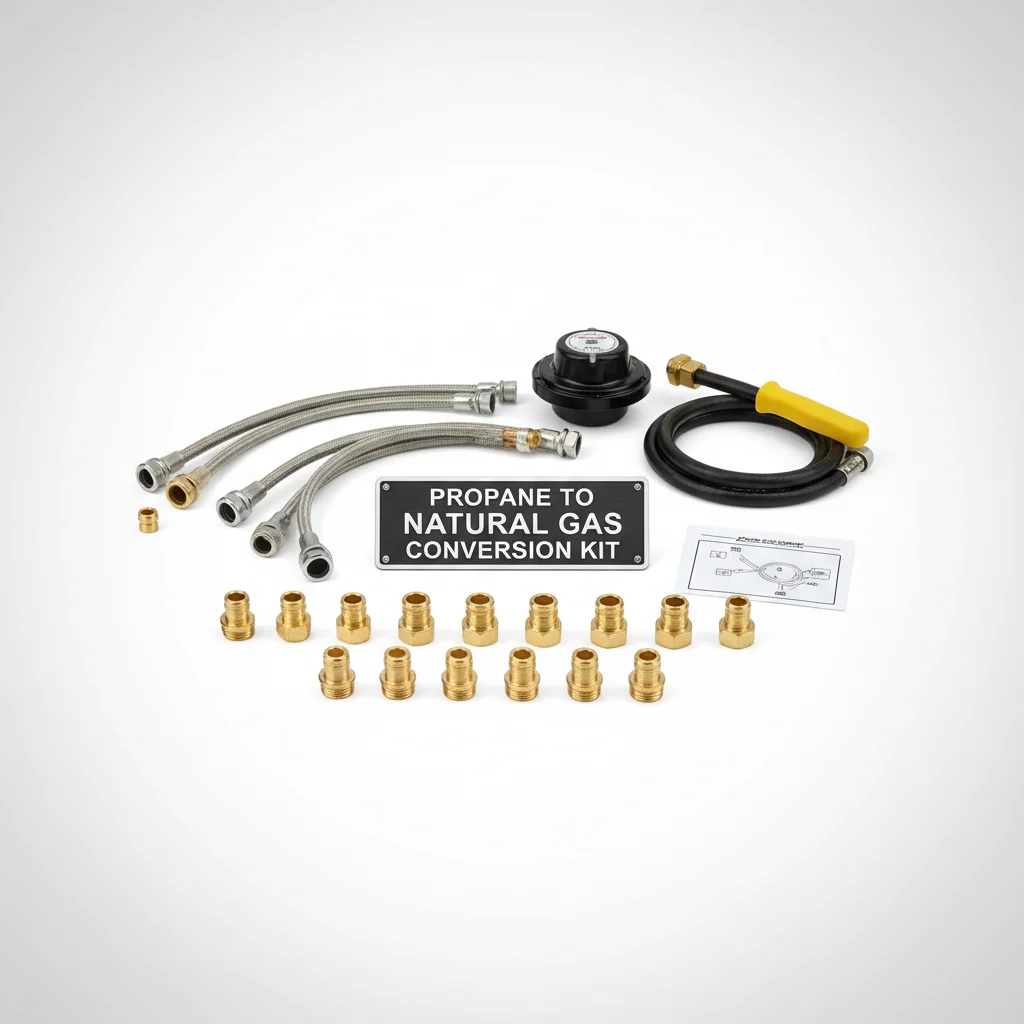
Converting your gas grill from propane to natural gas is a practical upgrade for many homeowners, offering convenience and potentially lower fuel costs. The process typically involves replacing several key components, including the gas regulator, orifices, and sometimes the hose. While it can be a DIY project for those comfortable with basic tools, professional installation is always recommended to ensure safety and proper function.
Understanding Gas Grill Conversion
Gas grills are designed to operate on either propane or natural gas, but not interchangeably without modification. Propane (LP) is stored under pressure in tanks and requires a different pressure regulator and burner orifices than natural gas (NG), which is delivered through a utility line at a lower, consistent pressure. A conversion kit provides the necessary parts to safely switch your grill’s fuel source.
Before attempting any conversion, it’s crucial to verify if your specific grill model is convertible. Not all grills are designed for dual-fuel operation, and attempting to convert a non-convertible grill can be dangerous and void your warranty. Always consult your grill’s owner’s manual or the manufacturer’s website for compatibility information.
Components of a Conversion Kit
A standard gas grill conversion kit from propane to natural gas typically includes several essential components. These parts are specifically engineered to adjust the grill’s fuel delivery system to match the characteristics of natural gas. Understanding each component’s role is key to a successful conversion.
- Natural Gas Regulator: This device reduces the pressure of the natural gas from your home’s supply line to the appropriate operating pressure for your grill. It’s distinct from a propane regulator, which handles higher pressures.
- Natural Gas Orifices: These small, precisely drilled brass fittings control the flow of gas to each burner. Natural gas requires larger orifices than propane due to its lower energy density.
- Natural Gas Hose and Quick-Connect Fitting: This hose connects your grill to your home’s natural gas line, often featuring a quick-connect fitting for easy attachment and detachment.
- Conversion Label: A new label indicating the grill has been converted to natural gas, important for safety and future reference.
- Installation Instructions: Detailed, model-specific instructions are vital for a safe and correct conversion.
The Conversion Process: Step-by-Step Overview
|
Our Picks for the Best Gas Grill in 2026
As an Amazon Associate I earn from qualifying purchases.
|
||
| Num | Product | Action |
|---|---|---|
| 1 | GasOne GP-1030S One 3 Burner Stainless Steel– Outdoor Cabinet Style with Wheels-High-Temperature Paint Coating Gas BBQ Grill – Elegant and Luxurious Design, Black |

|
| 2 | Black Portable Gas Grill, Dual 10,000 BTU Burners, 275 Sq.In Cooking Space, Push-to-Start Ignition, Wind-Proof Lid with Built-in Thermometer, Perfect for Camping Tailgates & Backyard BBQ Cookouts |
|
| 3 | WAA Portable Propane Griddle, Tabletop Portable Propane Gas Grill, Stainless Steel Flat Top Grill, Outdoor Cooking for Tailgating,Camping, RVs, BBQ, Patio, Silver (3-Burner-2) |
|
| 4 | Endark 4-burner propane gas grill | Stainless steel construction | Dual side racks and wheels | Designed for patio, garden, and backyard cooking |
|
| 5 | Monument Grills 4 Burner Propane Gas Grill, Stainless Steel Outdoor Patio Barbecue Grill, with Broil Zone Fast Heating, Knob Control, and Easy Cleanup, M410MBZ |
|
| 6 | Tabletop Gas Grill 3-Burner, 22-inch Portable Propane Grill, 30,000 BTUs Stainless Steel Grill with Foldable Legs, Ideal for BBQ, Camping, Patio, Backyard, Tailgate, and Holiday Gatherings |
|
| 7 | 2 Burner Propane Gas Grill with 26,500 BTUs Output, Porcelain-Enamel Main Body and Lid, Propane BBQ Grill with Warming Rack & Side Tables for Patio, Backyard, Poolside Gatherings |
|
| 8 | Cuisinart Chef's Style Tabletop Portable Propane Grill, 20,000 BTU Stainless Steel 2-Burner Outdoor Gas Grill for Camping, Tailgates, BBQ, Hassle-Free Setup, Twist-Start Ignition, CGG-306 |
|
| 9 | Endark 3-burner Propane Gas Grill | 37,000 BTU Stainless Steel with Side-iFre Function | with Enameled Cast Iron Grate,Thermometer and Side Stand Wheels | Great for Patio and Garden Outdoor Cooking |
|
| 10 | R.W.FLAME 4-Burner Propane Gas Grill with Side Burner, Stainless Steel Propane Grill 42000BTU for Outdoor Cooking, with Porcelain-Enameled Cast Iron Grates, Baking Pan, Silver |
|
Converting your gas grill requires careful attention to detail and adherence to safety protocols. Always ensure your grill is completely cool and disconnected from any fuel source before beginning. The general steps involve:
- Disconnecting Propane Components: Remove the existing propane regulator and hose from the grill.
- Replacing Orifices: Access the burner tubes and carefully replace the propane orifices with the new natural gas orifices provided in the kit. This often requires a small wrench or screwdriver.
- Installing the Natural Gas Regulator: Attach the new natural gas regulator to the grill’s manifold.
- Connecting the Natural Gas Hose: Securely connect the natural gas hose to the regulator and to your home’s natural gas supply line, using the quick-connect fitting if applicable.
- Leak Testing: This is a critical safety step. After all connections are made, turn on the natural gas supply and apply a soapy water solution to all new connections. Look for bubbles, which indicate a leak. If bubbles appear, tighten the connection and retest. Do not operate the grill if a leak is detected.
- Affixing the Conversion Label: Place the new natural gas conversion label in a prominent location on the grill.
For specific instructions tailored to your grill model, always refer to the manufacturer’s guide included with your conversion kit.
Safety Considerations and Professional Installation
Safety is paramount when working with gas appliances. Improper installation of a conversion kit can lead to gas leaks, fire hazards, or carbon monoxide poisoning. If you are not confident in your ability to perform the conversion safely, it is highly recommended to hire a qualified professional, such as a licensed plumber or gas technician.
A professional will ensure all connections are secure, perform thorough leak tests, and verify that your grill is operating correctly and safely on natural gas. They can also advise on the best way to connect to your home’s natural gas line if you don’t already have an outdoor gas hookup.
Benefits of Converting to Natural Gas
Switching your gas grill to natural gas offers several advantages. The most significant benefit is the convenience of an uninterrupted fuel supply, eliminating the need to refill or exchange propane tanks. This means no more running out of gas in the middle of a cookout. Natural gas is also typically less expensive than propane when purchased through a utility company, leading to potential long-term savings. Furthermore, natural gas burns cleaner than propane, which can contribute to a slightly more environmentally friendly grilling experience.
