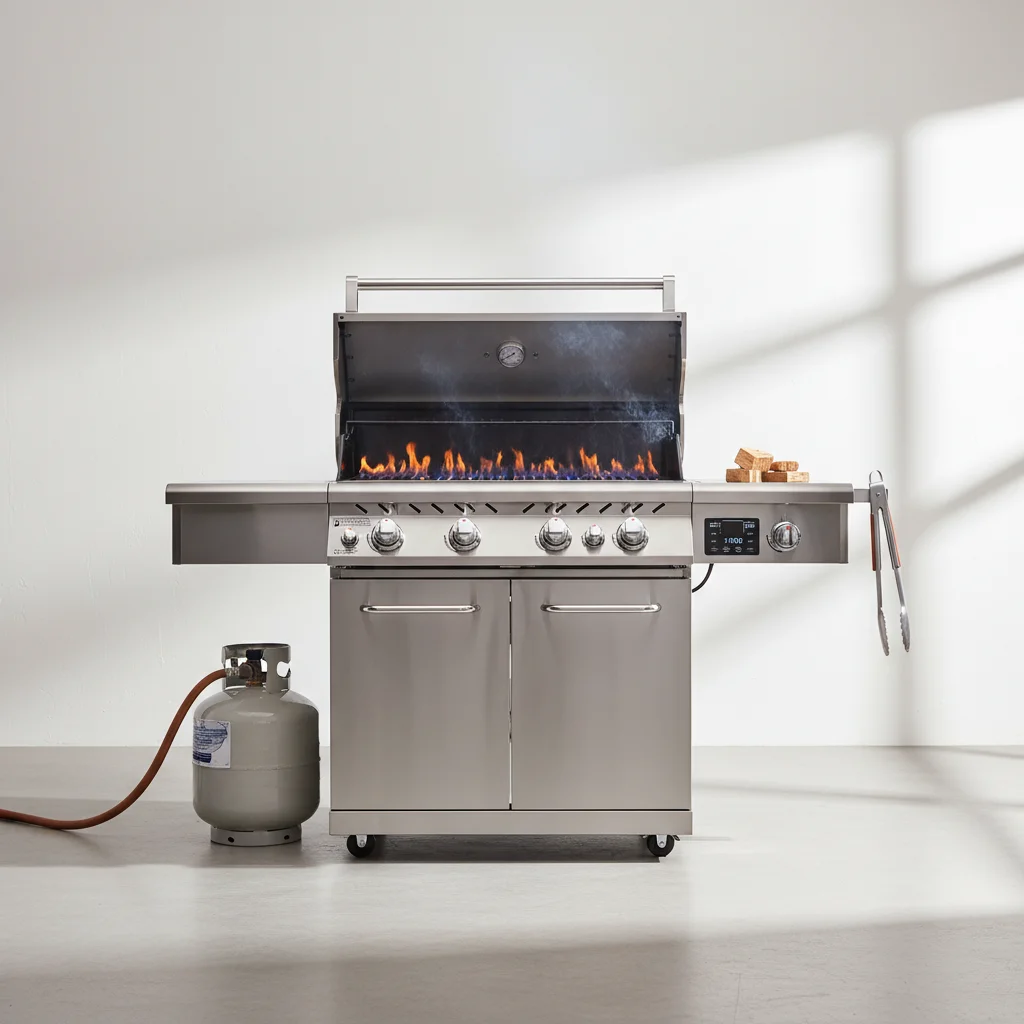
Understanding gas grill BTU output is crucial for achieving optimal cooking results. For most home grillers, a BTU output between 10,000 and 15,000 BTUs per main burner is sufficient for effective searing and even cooking. This range provides enough heat for a variety of foods without excessive fuel consumption.
What is BTU and Why Does It Matter for Grills?
BTU stands for British Thermal Unit, a measure of thermal energy. In the context of gas grills, it quantifies the amount of heat a burner can produce. A higher BTU rating generally indicates more potential heat, but it’s not the sole indicator of a grill’s performance. Efficient design, grate material, and lid seal also play significant roles in heat retention and distribution.
For example, a grill with excellent insulation and heavy-duty grates might cook just as effectively with a lower BTU rating than a poorly constructed grill with a higher BTU. It’s about how the heat is utilized, not just how much is generated.
Calculating Your Ideal BTU Needs
Your ideal gas grill BTU output depends on several factors, including the size of your grilling area, the types of food you typically cook, and your local climate. A good rule of thumb is to aim for approximately 80-100 BTUs per square inch of primary cooking surface. This ensures adequate heat for searing and maintaining consistent temperatures.
Consider if you frequently grill large cuts of meat, which require sustained high heat, or if you primarily cook smaller items like burgers and vegetables. For those who enjoy high-temperature searing, a grill with a dedicated searing burner or higher overall BTU output will be beneficial.
Impact of Grill Size on BTU Requirements
The physical size of your gas grill directly influences the BTU output you’ll need. Larger grills with more primary cooking surface naturally require more BTUs to heat the entire area evenly. A compact 2-burner grill might perform excellently with a total of 24,000 BTUs, while a 6-burner behemoth could require upwards of 60,000 BTUs to achieve similar heat intensity across its expanded surface.
It’s important to look at the BTU per burner, not just the total BTU, as this gives a better indication of individual burner performance. A grill with many low-BTU burners might struggle to reach high temperatures compared to one with fewer, more powerful burners.
Understanding BTU Distribution and Efficiency
|
Our Picks for the Best Gas Grill in 2026
As an Amazon Associate I earn from qualifying purchases.
|
||
| Num | Product | Action |
|---|---|---|
| 1 | 2 Burner Propane Gas Grill with 26,500 BTUs Output, Porcelain-Enamel Main Body and Lid, Propane BBQ Grill with Warming Rack & Side Tables for Patio, Backyard, Poolside Gatherings |

|
| 2 | Endark 3-burner Propane Gas Grill | 37,000 BTU Stainless Steel with Side-iFre Function | with Enameled Cast Iron Grate,Thermometer and Side Stand Wheels | Great for Patio and Garden Outdoor Cooking |
|
| 3 | Cuisinart Chef's Style Tabletop Portable Propane Grill, 20,000 BTU Stainless Steel 2-Burner Outdoor Gas Grill for Camping, Tailgates, BBQ, Hassle-Free Setup, Twist-Start Ignition, CGG-306 |
|
| 4 | Monument Grills 4 Burner Propane Gas Grill, Stainless Steel Outdoor Patio Barbecue Grill, with Broil Zone Fast Heating, Knob Control, and Easy Cleanup, M410MBZ |
|
| 5 | GasOne GP-1030S One 3 Burner Stainless Steel– Outdoor Cabinet Style with Wheels-High-Temperature Paint Coating Gas BBQ Grill – Elegant and Luxurious Design, Black |
|
| 6 | WAA Portable Propane Griddle, Tabletop Portable Propane Gas Grill, Stainless Steel Flat Top Grill, Outdoor Cooking for Tailgating,Camping, RVs, BBQ, Patio, Silver (3-Burner-2) |
|
| 7 | Tabletop Gas Grill 3-Burner, 22-inch Portable Propane Grill, 30,000 BTUs Stainless Steel Grill with Foldable Legs, Ideal for BBQ, Camping, Patio, Backyard, Tailgate, and Holiday Gatherings |
|
| 8 | R.W.FLAME 4-Burner Propane Gas Grill with Side Burner, Stainless Steel Propane Grill 42000BTU for Outdoor Cooking, with Porcelain-Enameled Cast Iron Grates, Baking Pan, Silver |
|
| 9 | Endark 4-burner propane gas grill | Stainless steel construction | Dual side racks and wheels | Designed for patio, garden, and backyard cooking |
|
| 10 | Black Portable Gas Grill, Dual 10,000 BTU Burners, 275 Sq.In Cooking Space, Push-to-Start Ignition, Wind-Proof Lid with Built-in Thermometer, Perfect for Camping Tailgates & Backyard BBQ Cookouts |
|
Beyond the raw BTU number, how that heat is distributed and retained is critical. High-quality grills often feature advanced burner designs, heat tents (flavorizer bars), and heavy-gauge cooking grates that help spread heat evenly and prevent hot spots. This efficiency means you get more usable heat from each BTU.
- Burner Material: Stainless steel or cast iron burners offer better durability and heat distribution.
- Heat Tents: These deflect grease and vaporize drippings, contributing to even heat.
- Lid Construction: A double-walled or heavy-gauge lid retains heat more effectively.
- Grate Material: Cast iron or thick stainless steel grates hold and transfer heat efficiently.
- Ventilation: Proper airflow prevents heat from escaping too quickly.
Common Misconceptions About High BTU Grills
Many consumers mistakenly believe that a higher BTU rating automatically equates to a better grill. While sufficient BTU is necessary, an excessively high BTU can lead to wasted fuel, uneven cooking, and even premature wear on grill components if not managed properly. It’s about balance and efficiency.
A grill with 12,000 BTUs per burner and excellent construction can often outperform a grill with 15,000 BTUs per burner but poor design. Focus on the overall build quality, materials, and features that contribute to heat retention and distribution, rather than just chasing the highest number. For a reliable option that balances power and efficiency, consider the.
Optimizing Your Grilling Experience with the Right BTU
Choosing a gas grill with the appropriate BTU output for your needs will significantly enhance your grilling experience. It ensures you have enough power for searing, consistent temperatures for roasting, and efficient fuel consumption. Don’t overspend on BTUs you don’t need, but also don’t underpower your grill, which can lead to frustratingly slow cooking times and poor results.
Always read reviews and compare specifications, paying attention to both total BTUs and BTUs per burner. Look for features that promote even heat, such as quality grates and effective heat tents. For those seeking a versatile grill with optimized BTU output, theoffers excellent performance.
