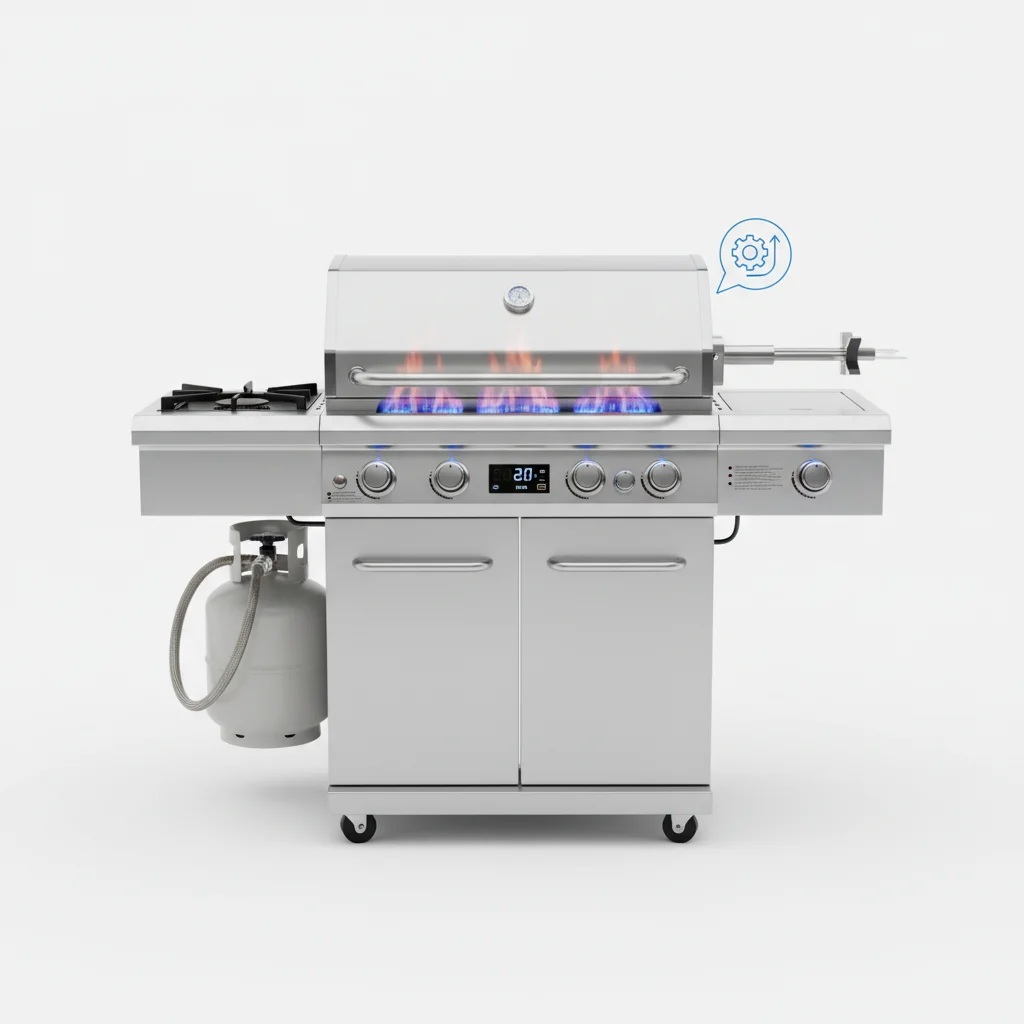
Understanding gas grill BTU (British Thermal Units) is crucial for selecting a grill that meets your cooking needs. While a higher BTU might seem better, the ideal BTU for a gas grill typically ranges from 20,000 to 60,000 BTUs for the main burners, depending on the grill’s size and design. This range ensures efficient heating and consistent cooking temperatures without wasting fuel or overheating your food. The key is to balance BTU output with the grill’s cooking area and construction quality.
What is BTU and Why Does it Matter for Grilling?
BTU is a unit of energy that measures the heat output of a gas grill. Specifically, one BTU is the amount of energy required to raise the temperature of one pound of water by one degree Fahrenheit. For gas grills, BTU indicates how much heat the burners can generate per hour. A higher BTU rating generally means the grill can get hotter faster and maintain higher temperatures, which is important for searing and cooking larger cuts of meat. However, a grill’s efficiency and heat distribution are also critical factors, not just the raw BTU number.
Factors Influencing Ideal Gas Grill BTU
Several factors determine the optimal BTU for your gas grill. The size of the cooking area is paramount; larger grills naturally require more BTUs to heat evenly. The type of cooking you primarily do also plays a role. If you frequently sear steaks at high temperatures, a grill with a higher BTU output will be more effective. Conversely, if you mostly cook at lower temperatures or use indirect heat, an extremely high BTU might be overkill. The construction materials, such as the thickness of the grates and the lid, also impact heat retention and overall performance, making a lower BTU grill potentially more efficient than a high BTU, poorly constructed one.
BTU for Different Grill Sizes
|
Our Picks for the Best Gas Grill in 2026
As an Amazon Associate I earn from qualifying purchases.
|
||
| Num | Product | Action |
|---|---|---|
| 1 | Black Portable Gas Grill, Dual 10,000 BTU Burners, 275 Sq.In Cooking Space, Push-to-Start Ignition, Wind-Proof Lid with Built-in Thermometer, Perfect for Camping Tailgates & Backyard BBQ Cookouts |

|
| 2 | 2 Burner Propane Gas Grill with 26,500 BTUs Output, Porcelain-Enamel Main Body and Lid, Propane BBQ Grill with Warming Rack & Side Tables for Patio, Backyard, Poolside Gatherings |
|
| 3 | Cuisinart Chef's Style Tabletop Portable Propane Grill, 20,000 BTU Stainless Steel 2-Burner Outdoor Gas Grill for Camping, Tailgates, BBQ, Hassle-Free Setup, Twist-Start Ignition, CGG-306 |
|
| 4 | Endark 4-burner propane gas grill | Stainless steel construction | Dual side racks and wheels | Designed for patio, garden, and backyard cooking |
|
| 5 | GasOne GP-1030S One 3 Burner Stainless Steel– Outdoor Cabinet Style with Wheels-High-Temperature Paint Coating Gas BBQ Grill – Elegant and Luxurious Design, Black |
|
| 6 | Endark 3-burner Propane Gas Grill | 37,000 BTU Stainless Steel with Side-iFre Function | with Enameled Cast Iron Grate,Thermometer and Side Stand Wheels | Great for Patio and Garden Outdoor Cooking |
|
| 7 | WAA Portable Propane Griddle, Tabletop Portable Propane Gas Grill, Stainless Steel Flat Top Grill, Outdoor Cooking for Tailgating,Camping, RVs, BBQ, Patio, Silver (3-Burner-2) |
|
| 8 | R.W.FLAME 4-Burner Propane Gas Grill with Side Burner, Stainless Steel Propane Grill 42000BTU for Outdoor Cooking, with Porcelain-Enameled Cast Iron Grates, Baking Pan, Silver |
|
| 9 | Monument Grills 4 Burner Propane Gas Grill, Stainless Steel Outdoor Patio Barbecue Grill, with Broil Zone Fast Heating, Knob Control, and Easy Cleanup, M410MBZ |
|
| 10 | Tabletop Gas Grill 3-Burner, 22-inch Portable Propane Grill, 30,000 BTUs Stainless Steel Grill with Foldable Legs, Ideal for BBQ, Camping, Patio, Backyard, Tailgate, and Holiday Gatherings |
|
The appropriate BTU rating varies significantly with grill size. For compact, portable grills, 10,000-20,000 BTUs might be sufficient. Mid-sized grills, often with 3-4 burners, typically fall into the 30,000-50,000 BTU range. Larger, professional-grade grills with extensive cooking surfaces and multiple burners can exceed 60,000 BTUs. It’s important to consider the BTU per square inch of cooking surface, as this provides a more accurate measure of a grill’s heating power rather than just the total BTU. A good rule of thumb is around 80-100 BTUs per square inch for effective grilling.
- Small Grills (1-2 burners): 10,000-25,000 total BTU
- Medium Grills (3-4 burners): 30,000-50,000 total BTU
- Large Grills (5+ burners): 50,000-75,000+ total BTU
- Side Burners: Typically 10,000-15,000 BTU each
- Infrared Burners: Often higher BTU for intense searing
Beyond BTU: Other Considerations for Grill Performance
While BTU is an important metric, it’s not the only indicator of a grill’s performance. Heat distribution is crucial; a grill with lower BTU but excellent heat distribution will often outperform a high BTU grill with hot spots and cold zones. The quality of the grates (cast iron, stainless steel), the thickness of the lid, and the overall construction materials all contribute to how well a grill retains and distributes heat. Features like infrared burners, rotisserie burners, and side burners also add to the grill’s versatility and overall cooking experience, often with their own specific BTU ratings. Always look at the complete package when evaluating a grill.
When choosing a gas grill, consider your cooking habits, the number of people you typically cook for, and the types of food you prepare. Don’t get fixated solely on the highest BTU number; instead, seek a balance between BTU, construction quality, and features that align with your grilling style. A well-designed grill with moderate BTU can often provide a superior cooking experience compared to an overpowered, inefficient model.For those seeking a balance of power and efficiency, exploring grills with robust construction and even heat distribution is key.

This really helped me understand why my smaller grill with a lower BTU rating still gets super hot. It’s all about balancing the BTU output with the grill’s cooking area, which I never considered before. I used to just look at the big numbers. Now I know what to look for when I eventually upgrade to a larger model for those big family cookouts.
I appreciate the breakdown of what BTU actually means for grilling. My main issue is that my grill, which is supposedly in the ideal BTU range, still takes forever to heat up. I think the construction quality might be the real problem, as it feels pretty flimsy. It’s good to know that’s also a factor, not just the BTU number.
I always thought more BTUs meant a better grill, but after reading about the 20,000 to 60,000 BTU range, it makes so much more sense. My old grill was a BTU hog and never cooked evenly. Just got a new one that’s perfectly within that sweet spot, and the difference in consistent cooking temperatures is night and day. No more burnt edges and raw middles!
Finally, someone explains BTU in a way that’s easy to understand! I was always confused about why some smaller grills seemed to perform better than larger, higher-BTU ones. The point about not wasting fuel or overheating food by choosing the right BTU for your needs is a game-changer. My steaks are coming out perfect now.