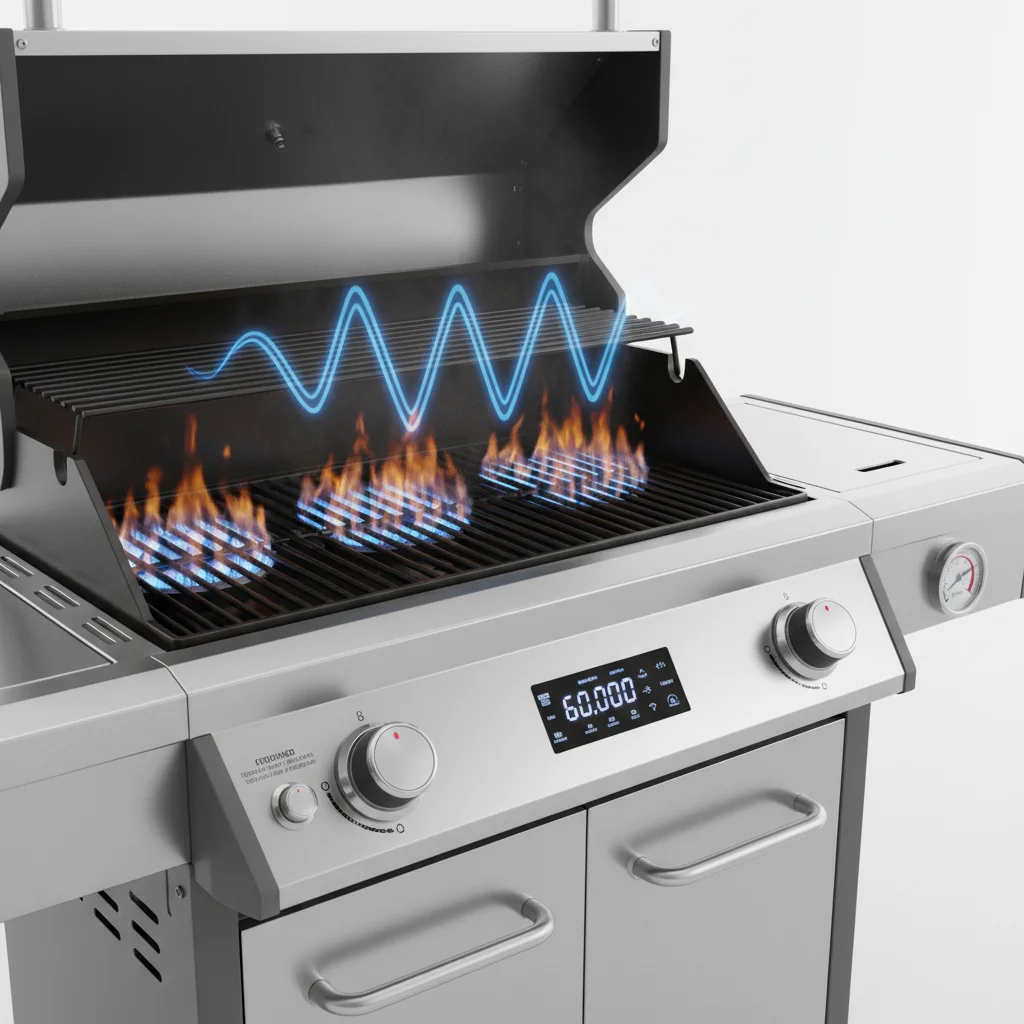
Understanding gas grill BTU (British Thermal Units) is crucial for efficient cooking, and for most home users, a grill with 30,000 to 50,000 BTUs is perfectly adequate. While higher BTU numbers might seem impressive, the actual cooking performance depends more on the grill’s design, heat distribution, and grate material than on raw BTU output alone. A well-designed grill with fewer BTUs can often outperform a poorly designed one with a higher rating.
What is BTU and Why Does it Matter for Grills?
BTU is a unit of energy that measures the heat output of a gas grill. Specifically, one BTU is the amount of energy required to raise the temperature of one pound of water by one degree Fahrenheit. For gas grills, the BTU rating indicates how much fuel the burners can consume and convert into heat over an hour. A higher BTU rating generally means the grill can produce more heat, which can be beneficial for searing or cooking large quantities of food quickly. However, it’s not the only factor determining a grill’s effectiveness.
The efficiency of a grill’s design plays a significant role. A grill with excellent heat retention, such as one with a double-walled lid or heavy-duty grates, can make better use of its BTUs than a grill with poor insulation. This means a lower BTU grill with superior construction can often reach and maintain desired cooking temperatures more effectively than a high-BTU grill with thin materials and poor heat distribution.
Matching BTU to Grill Size and Cooking Style
The ideal BTU rating for your gas grill largely depends on its size and your typical cooking habits. Smaller grills, like those with two burners, usually require fewer BTUs (around 20,000-30,000) to heat their cooking surface adequately. Larger grills, with four or more burners, naturally need more BTUs (40,000-60,000+) to cover a greater area and maintain consistent temperatures across the entire grate.
Consider what you primarily cook. If you frequently sear steaks at high temperatures, a grill with a higher BTU output or a dedicated sear burner might be beneficial. For general grilling of burgers, chicken, and vegetables, a moderate BTU range is usually sufficient. Overly high BTUs on a small grill can lead to hot spots and uneven cooking, while insufficient BTUs on a large grill will result in slow preheating and difficulty maintaining high temperatures.
Factors Beyond BTU for Grill Performance
|
Our Picks for the Best Gas Grill in 2026
As an Amazon Associate I earn from qualifying purchases.
|
||
| Num | Product | Action |
|---|---|---|
| 1 | Black Portable Gas Grill, Dual 10,000 BTU Burners, 275 Sq.In Cooking Space, Push-to-Start Ignition, Wind-Proof Lid with Built-in Thermometer, Perfect for Camping Tailgates & Backyard BBQ Cookouts |

|
| 2 | R.W.FLAME 4-Burner Propane Gas Grill with Side Burner, Stainless Steel Propane Grill 42000BTU for Outdoor Cooking, with Porcelain-Enameled Cast Iron Grates, Baking Pan, Silver |
|
| 3 | Endark 4-burner propane gas grill | Stainless steel construction | Dual side racks and wheels | Designed for patio, garden, and backyard cooking |
|
| 4 | 2 Burner Propane Gas Grill with 26,500 BTUs Output, Porcelain-Enamel Main Body and Lid, Propane BBQ Grill with Warming Rack & Side Tables for Patio, Backyard, Poolside Gatherings |
|
| 5 | Tabletop Gas Grill 3-Burner, 22-inch Portable Propane Grill, 30,000 BTUs Stainless Steel Grill with Foldable Legs, Ideal for BBQ, Camping, Patio, Backyard, Tailgate, and Holiday Gatherings |
|
| 6 | Monument Grills 4 Burner Propane Gas Grill, Stainless Steel Outdoor Patio Barbecue Grill, with Broil Zone Fast Heating, Knob Control, and Easy Cleanup, M410MBZ |
|
| 7 | GasOne GP-1030S One 3 Burner Stainless Steel– Outdoor Cabinet Style with Wheels-High-Temperature Paint Coating Gas BBQ Grill – Elegant and Luxurious Design, Black |
|
| 8 | Endark 3-burner Propane Gas Grill | 37,000 BTU Stainless Steel with Side-iFre Function | with Enameled Cast Iron Grate,Thermometer and Side Stand Wheels | Great for Patio and Garden Outdoor Cooking |
|
| 9 | WAA Portable Propane Griddle, Tabletop Portable Propane Gas Grill, Stainless Steel Flat Top Grill, Outdoor Cooking for Tailgating,Camping, RVs, BBQ, Patio, Silver (3-Burner-2) |
|
| 10 | Cuisinart Chef's Style Tabletop Portable Propane Grill, 20,000 BTU Stainless Steel 2-Burner Outdoor Gas Grill for Camping, Tailgates, BBQ, Hassle-Free Setup, Twist-Start Ignition, CGG-306 |
|
While BTU is a key specification, it’s just one piece of the puzzle when evaluating a gas grill’s performance. Several other factors contribute significantly to how well a grill cooks:
- Grate Material: Cast iron and stainless steel grates retain and distribute heat more effectively than thinner wire grates.
- Lid Construction: Double-walled or heavy-gauge lids improve heat retention and consistency.
- Burner Design: Quality burners provide even flame distribution, preventing hot and cold spots.
- Heat Deflectors/Flavorizer Bars: These components help distribute heat evenly and vaporize drippings for added flavor.
- Ventilation: Proper airflow is essential for consistent heat and preventing flare-ups.
A grill with excellent heat retention and distribution can achieve superior cooking results with fewer BTUs than a grill that leaks heat or has uneven burner performance. Always look at the overall construction and features, not just the BTU number in isolation.
Optimizing Your Grill’s Heat Efficiency
To get the most out of your gas grill’s BTU output, regardless of its rating, consider these tips. Always preheat your grill thoroughly for 10-15 minutes with the lid closed; this allows the grates to absorb and radiate heat effectively. Keep the lid closed as much as possible during cooking to maintain consistent temperatures and prevent heat loss. Regularly clean your grill grates and burner covers to ensure optimal heat transfer and prevent blockages that can affect flame distribution.
Additionally, ensure your propane tank is full and the regulator is functioning correctly to provide a consistent fuel supply. If you notice a significant drop in heat output over time, it might be an indication of a clogged burner or a failing regulator, rather than an inherent BTU limitation of your grill. Proper maintenance can significantly extend the life and efficiency of your grilling experience.
Conclusion: Finding Your BTU Sweet Spot
In summary, while gas grill BTU is an important indicator of heat potential, it’s not the sole determinant of a grill’s quality or cooking performance. For most home grillers, a range of 30,000 to 50,000 BTUs is a good starting point, but always consider the grill’s size, construction quality, and your specific grilling needs. Focus on a grill that offers a balance of adequate BTU output with excellent heat retention, even distribution, and durable materials for the best outdoor cooking experience.
