Heavy-duty commercial gas grills are essential for large events and catering, offering superior durability, expansive cooking areas, and precise temperature control compared to standard backyard models. These grills are engineered for high-volume cooking, ensuring efficiency and consistent results for hundreds of guests. Understanding key features like BTU output, construction materials, and fuel type is crucial for selecting a model that meets specific operational demands and elevates culinary operations.
Overview of Commercial Gas Grills
A commercial gas grill is significantly more robust than its residential counterpart, designed for continuous use in demanding environments such as restaurants, catering events, and large outdoor gatherings. These grills feature superior construction, often using thicker gauges of 304-grade stainless steel for enhanced longevity and resistance to corrosion and wear. Their primary appeal lies in efficiency and capacity, enabling chefs to cook substantial quantities of food quickly and consistently. Commercial gas grills provide the versatility needed for diverse menus and high-pressure situations, from searing steaks to perfectly charring vegetables.
The evolution of gas grills has led to sophisticated systems with multiple burners, integrated features, and enhanced safety mechanisms. Today’s market offers various types tailored for different commercial needs, including built-in units for permanent outdoor kitchens, freestanding models for flexibility, and highly mobile grills equipped with casters for easy transport to various event locations. Each type serves a specific purpose, contributing to the overall efficiency and success of large-scale food preparation. For see our gas grill recommendations on this site.
Advantages and Disadvantages of Commercial Gas Grills
Commercial gas grills offer numerous benefits, making them a preferred choice for large parties and professional catering. Their most significant advantage is convenience; push-button ignitions allow for quick start-up, reaching cooking temperature in minutes. This speed is crucial when serving hundreds of guests, as it significantly reduces waiting times. Furthermore, gas grills provide exceptional temperature control, allowing operators to easily adjust heat zones for different foods simultaneously, ensuring everything is cooked to perfection. Consistent heat output and cleaner operation, with no ash or charcoal residue, also contribute to a more efficient and enjoyable grilling experience.
However, these powerful appliances do have certain drawbacks. The initial investment for a heavy-duty commercial gas grill is generally higher than for residential or charcoal models, reflecting their superior materials and engineering. Propane grills require frequent tank replacements during busy periods, which can be an operational consideration. Natural gas grills, while offering a continuous fuel supply, typically demand professional installation and a connection to a gas line, limiting their portability. Moreover, the complex internal components and multiple burners mean that commercial gas grills can sometimes require more intricate maintenance compared to simpler grill types.
Comparing Commercial Gas Grills With Other Grill Types
When equipping for large events, event professionals often weigh the options between gas, charcoal, and electric grills. Each has unique characteristics that cater to different preferences and operational requirements.
Gas Grill vs. Charcoal Grill: The debate between gas and charcoal often centers on flavor and convenience. Charcoal grills impart a distinctive smoky aroma and flavor but are less convenient, taking longer to heat up and requiring more effort for temperature regulation and cleanup. Gas grills, on the other hand, prioritize speed and precision. They ignite instantly, offer exact temperature control, and are much cleaner to operate. While some argue they lack the deep smoky flavor, modern gas grills can often be outfitted with smoker boxes to infuse wood smoke, offering a balance of flavor and practicality. For large-scale operations where consistency and speed are paramount, gas grills typically hold the edge.
Gas Grill vs. Electric Grill: Electric grills are generally praised for their ease of use, safety, and suitability for indoor or constrained outdoor spaces where open flames are restricted. They are often compact and require minimal setup, plugging into a standard outlet. However, electric grills typically cannot match the raw power and high heat output of a commercial gas grill. For searing and cooking large volumes of food quickly, gas grills are far superior in performance. Their robust construction and ability to reach very high temperatures make them indispensable for achieving professional-grade results at large outdoor events, where mobility and high capacity are often key.
Key Factors When Selecting a Commercial Gas Grill
Choosing the ideal heavy-duty commercial gas grill for large parties involves careful consideration of several crucial elements. Prioritizing these factors will ensure you select a grill that meets your specific operational demands, guarantees efficiency, and provides lasting value.
Size and Cooking Capacity
|
Our Picks for the Best Gas Grill in 2026
As an Amazon Associate I earn from qualifying purchases.
|
||
| Num | Product | Action |
|---|---|---|
| 1 | Endark 4-burner propane gas grill | Stainless steel construction | Dual side racks and wheels | Designed for patio, garden, and backyard cooking |

|
| 2 | Endark 3-burner Propane Gas Grill | 37,000 BTU Stainless Steel with Side-iFre Function | with Enameled Cast Iron Grate,Thermometer and Side Stand Wheels | Great for Patio and Garden Outdoor Cooking |
|
| 3 | GasOne GP-1030S One 3 Burner Stainless Steel– Outdoor Cabinet Style with Wheels-High-Temperature Paint Coating Gas BBQ Grill – Elegant and Luxurious Design, Black |
|
| 4 | 2 Burner Propane Gas Grill with 26,500 BTUs Output, Porcelain-Enamel Main Body and Lid, Propane BBQ Grill with Warming Rack & Side Tables for Patio, Backyard, Poolside Gatherings |
|
| 5 | Tabletop Gas Grill 3-Burner, 22-inch Portable Propane Grill, 30,000 BTUs Stainless Steel Grill with Foldable Legs, Ideal for BBQ, Camping, Patio, Backyard, Tailgate, and Holiday Gatherings |
|
| 6 | Monument Grills 4 Burner Propane Gas Grill, Stainless Steel Outdoor Patio Barbecue Grill, with Broil Zone Fast Heating, Knob Control, and Easy Cleanup, M410MBZ |
|
| 7 | Cuisinart Chef's Style Tabletop Portable Propane Grill, 20,000 BTU Stainless Steel 2-Burner Outdoor Gas Grill for Camping, Tailgates, BBQ, Hassle-Free Setup, Twist-Start Ignition, CGG-306 |
|
| 8 | Black Portable Gas Grill, Dual 10,000 BTU Burners, 275 Sq.In Cooking Space, Push-to-Start Ignition, Wind-Proof Lid with Built-in Thermometer, Perfect for Camping Tailgates & Backyard BBQ Cookouts |
|
| 9 | R.W.FLAME 4-Burner Propane Gas Grill with Side Burner, Stainless Steel Propane Grill 42000BTU for Outdoor Cooking, with Porcelain-Enameled Cast Iron Grates, Baking Pan, Silver |
|
| 10 | WAA Portable Propane Griddle, Tabletop Portable Propane Gas Grill, Stainless Steel Flat Top Grill, Outdoor Cooking for Tailgating,Camping, RVs, BBQ, Patio, Silver (3-Burner-2) |
|
For catering large parties, the sheer volume of food you need to prepare dictates the grill’s necessary size and cooking capacity. Look for models boasting expansive cooking surfaces, often exceeding 1000 square inches, to accommodate multiple food items simultaneously. A good rule of thumb is to aim for approximately 72 square inches of grill surface per person you intend to serve. Features like multiple tiers or removable grates can optimize space, allowing for vertical cooking or separating raw from cooked foods, thereby maximizing throughput during peak hours.
BTU Output and Heat Distribution
British Thermal Units (BTUs) quantify a grill’s heat output, a critical factor for rapid heating and maintaining consistent temperatures under heavy use. For large events, grills with a total BTU output ranging from 80,000 to 100,000 are often recommended. However, it’s not just about the total BTU count; efficient heat distribution is equally vital. Aim for a grill that delivers 80 to 100 BTUs per square inch of cooking area to ensure uniform heating across the entire surface, preventing hot spots and cold zones. Grills with adjustable heat zones are particularly beneficial, allowing chefs to cook different items at varying temperatures concurrently.
Construction Materials
The durability of a commercial gas grill largely depends on its construction materials. The gold standard for commercial-grade grills is 304-grade stainless steel. This material offers exceptional resistance to rust, corrosion, and the high temperatures associated with continuous use. While a higher upfront cost, 304 stainless steel ensures a longer lifespan and retains its aesthetic appeal, saving on replacement costs in the long run. Cooking grates made from cast iron or heavy-duty stainless steel are also crucial for superior heat retention, even cooking, and prominent sear marks.
Fuel Type Considerations
Commercial gas grills primarily run on either liquid propane (LP) or natural gas (NG), each presenting distinct advantages for event professionals. Propane grills offer unmatched portability, drawing fuel from refillable tanks, making them ideal for mobile catering or events without fixed gas lines. However, the need for frequent tank replacements during extended use can be a logistical challenge. Natural gas grills, connected directly to a building’s gas line, provide an uninterrupted fuel supply, eliminating the worry of running out of fuel. This makes them perfect for permanent outdoor kitchens or venues that host frequent large events, though they require professional installation and are not portable.
Essential Features and Safety
Modern commercial gas grills come equipped with a range of features designed to enhance usability, versatility, and safety. Look for robust ignition systems, such as simple push-button or cross-tie ignition, for reliable start-ups. Timers, like the FuelStop one-hour gas flow timer found in some PGS models, add a layer of safety by automatically shutting off the gas supply. Mobility features, including heavy-duty casters with locking mechanisms, are invaluable for moving large grills. Additional features like side burners for sauces, warming racks, rotisserie attachments, and integrated thermometers expand cooking capabilities. Safety is paramount; ensure the grill is CSA certified for public events and includes features like flame tamer technology to prevent grease fires and cool-grip handles for safe operation.
> “In the fast-paced world of catering, a grill that offers both power and precision is invaluable. You need equipment that heats up quickly, holds temperature reliably, and can withstand the rigors of back-to-back events.” – Chef Elena Rodriguez, Lead Culinary Consultant for EventPro Solutions
Comparison Table: Top Commercial Gas Grills for Large Parties
| Model | Dimensions (Approx.) | Total BTU Output (Approx.) | Material | Key Features | Price Range (Est.) |
|---|---|---|---|---|---|
| Crown Verity MCB-36 PKG | 36″ W x 28″ D x 36″ H | 75,000 BTU | 304 Stainless Steel | 5 Main Burners, Rapid Heat-Up, Portable (casters), Roll Dome, Removable Shelf | $$$$ |
| PGS T-Series S36T | 39″ W x 28″ D x 48″ H | 60,000 BTU | Cast Aluminum / 304 SS | FuelStop Timer, Anti-Theft Knobs, In-Ground Post/Pedestal/Built-in Options, SS Grids | $$$ |
| Belson Porta-Grill II | 72″ L x 28″ W x 38″ H | 150,000 BTU | Steel / Nickel-Plated Grate | 4 Individually Adjustable Burners, 10 Sq. Ft. Cooking Area, Push-Button Ignition, Casters, 40 lb. Propane Cylinder Included | $$$$ |
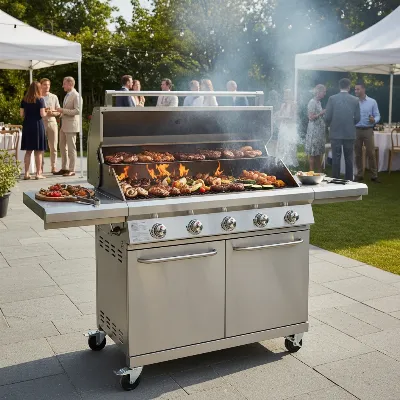 A sleek, heavy-duty commercial gas grill with multiple burners actively cooking various foods for a large party, set up outdoors on a sunny day. The grill is made of gleaming stainless steel, with flames visible under cast iron grates, and surrounded by fresh ingredients.
Purchasing Your Commercial Gas Grill: A Step-by-Step Guide
Acquiring a commercial gas grill is a significant investment that requires a methodical approach to ensure you get the best value and performance. Follow these steps to navigate the buying process effectively.
- Assess Your Needs and Budget: Begin by clearly defining your operational requirements. How many people do you typically serve? What type of cuisine will you be grilling? What is your maximum budget? Understanding these parameters will narrow down your options considerably.
- Research Brands and Models: Explore reputable manufacturers known for their commercial-grade equipment. Brands like Crown Verity, PGS, Blaze Grills, and Belson are often cited for their durable and high-performing models. Compare their offerings based on the factors discussed above.
- Read Reviews and Consult Experts: Delve into online reviews and testimonials from other catering professionals or restaurant owners. Their real-world experiences can provide invaluable insights into a grill’s performance, durability, and ease of maintenance. Don’t hesitate to consult with kitchen equipment suppliers or experienced chefs for personalized recommendations.
- Buy from Reputable Retailers: Purchase your commercial gas grill from authorized dealers or well-established commercial kitchen suppliers. These retailers typically offer genuine products, better warranties, and reliable customer service and technical support.
- Inspect the Product: Before finalizing your purchase, if possible, inspect the grill in person or thoroughly review product specifications and images. Check the gauge of the stainless steel, the quality of the welds, the smoothness of moving parts, and the overall construction integrity to ensure it meets commercial-grade standards.
Maximizing Lifespan: Usage and Maintenance Tips
To ensure your heavy-duty commercial gas grill continues to perform optimally for years, consistent care and proper usage are paramount. Regular maintenance not only extends the grill’s lifespan but also guarantees safety and consistent cooking results.
Firstly, clean your gas grill after every use. Food residue, grease, and marinades can accumulate and harden, impacting performance and potentially leading to flare-ups. A thorough cleaning of grates, burners, and drip trays with appropriate cleaning tools and degreasers will keep your grill pristine. Secondly, regularly inspect and replace worn components. Over time, burners, igniters, and heat tents may degrade. Routinely checking for rust, cracks, or blockages and replacing faulty parts promptly will prevent more significant issues.
Thirdly, store your gas grill correctly when not in use. If it’s a mobile unit, move it to a covered, secure area. For built-in grills, investing in a heavy-duty, weather-resistant cover will protect it from the elements, especially during off-seasons. Finally, always prioritize safety when operating your commercial gas grill. Ensure proper ventilation, keep flammable materials away from the grill, and regularly check gas lines and connections for leaks. Adhering to manufacturer guidelines for operation and maintenance is crucial for a safe and efficient grilling experience.
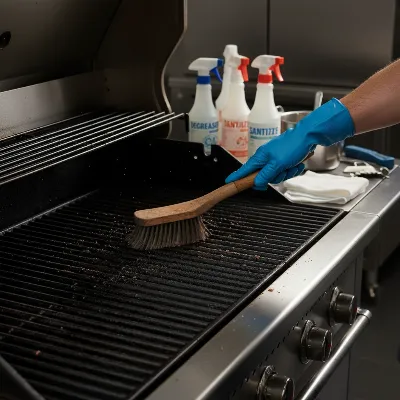 A professional chef meticulously cleaning the stainless steel grates of a large commercial gas grill with a heavy-duty brush, surrounded by cleaning supplies, under soft indoor lighting.
Conclusion
Choosing the best heavy-duty commercial gas grill for large parties is a critical decision that impacts the efficiency, quality, and success of your catering or event operations. By prioritizing factors such as expansive cooking capacity, robust BTU output, premium 304-grade stainless steel construction, and essential safety features, you can invest in a grill that will consistently deliver exceptional performance. Proper research, smart purchasing, and diligent maintenance will ensure your commercial gas grill remains a reliable workhorse, effortlessly handling the demands of any large gathering.
What exciting new dishes will you create with the unparalleled power and precision of your next commercial gas grill?
Frequently Asked Questions
What differentiates a commercial gas grill from a residential one?
Commercial gas grills are built for heavy-duty, continuous use, featuring more durable materials like thicker 304-grade stainless steel, higher BTU outputs, larger cooking areas, and often enhanced safety features. They are designed to withstand the rigorous demands of professional kitchens and large-scale catering.
How much cooking area do I need for a large event?
For large events, aim for a grill with a cooking surface exceeding 1000 square inches. A practical guideline suggests around 72 square inches of cooking space per person, allowing ample room to cook large quantities of food efficiently without overcrowding.
Is BTU output the most important factor for a commercial grill?
While high BTU output (80k-100k total) is crucial for quick heating and maintaining temperature, it’s not the only factor. Efficient heat distribution across the entire cooking surface, ideally 80-100 BTUs per square inch, is equally vital for even cooking and preventing hot/cold spots.
Should I choose a propane or natural gas commercial grill?
The choice depends on your operational needs. Propane grills offer portability for mobile events but require tank refills. Natural gas grills provide a continuous fuel supply for permanent setups but require professional installation and a fixed gas line.
What are essential safety features for a commercial gas grill?
Key safety features include CSA certification, reliable ignition systems (like cross-tie ignition), flame tamer technology to prevent grease fires, cool-grip handles, and safety timers (e.g., FuelStop) that automatically shut off the gas after a set period.
How do I maintain my commercial gas grill for longevity?
Regular cleaning after each use, including grates and drip trays, is vital. Routinely inspect and replace worn components like burners and igniters. Store the grill properly, ideally covered, when not in use and always follow manufacturer safety and maintenance guidelines.
Frequently Asked Questions
What differentiates a commercial gas grill from a residential one?
Commercial gas grills are built for heavy-duty, continuous use, featuring more durable materials like thicker 304-grade stainless steel, higher BTU outputs, larger cooking areas, and often enhanced safety features. They are designed to withstand the rigorous demands of professional kitchens and large-scale catering.
How much cooking area do I need for a large event?
For large events, aim for a grill with a cooking surface exceeding 1000 square inches. A practical guideline suggests around 72 square inches of cooking space per person, allowing ample room to cook large quantities of food efficiently without overcrowding.
Is BTU output the most important factor for a commercial grill?
While high BTU output (80k-100k total) is crucial for quick heating and maintaining temperature, it's not the only factor. Efficient heat distribution across the entire cooking surface, ideally 80-100 BTUs per square inch, is equally vital for even cooking and preventing hot/cold spots.
Should I choose a propane or natural gas commercial grill?
The choice depends on your operational needs. Propane grills offer portability for mobile events but require tank refills. Natural gas grills provide a continuous fuel supply for permanent setups but require professional installation and a fixed gas line.
What are essential safety features for a commercial gas grill?
Key safety features include CSA certification, reliable ignition systems (like cross-tie ignition), flame tamer technology to prevent grease fires, cool-grip handles, and safety timers (e.g., FuelStop) that automatically shut off the gas after a set period.
How do I maintain my commercial gas grill for longevity?
Regular cleaning after each use, including grates and drip trays, is vital. Routinely inspect and replace worn components like burners and igniters. Store the grill properly, ideally covered, when not in use and always follow manufacturer safety and maintenance guidelines.
Purchasing Your Commercial Gas Grill
Acquiring a commercial gas grill is a significant investment that requires a methodical approach to ensure you get the best value and performance.
Begin by clearly defining your operational requirements. Consider how many people you typically serve, the type of cuisine you'll be grilling, and your maximum budget. Understanding these parameters will narrow down your options considerably.
Explore reputable manufacturers known for their commercial-grade equipment, such as Crown Verity, PGS, Blaze Grills, and Belson. Compare their offerings based on factors like BTU output, construction materials, and cooking capacity.
Delve into online reviews and testimonials from other catering professionals or restaurant owners for real-world insights. Their experiences can provide invaluable information on a grill's performance, durability, and ease of maintenance. Consult with kitchen equipment suppliers or experienced chefs for personalized recommendations.
Purchase your commercial gas grill from authorized dealers or well-established commercial kitchen suppliers. These retailers typically offer genuine products, better warranties, and reliable customer service and technical support.
Before finalizing your purchase, if possible, inspect the grill in person or thoroughly review product specifications and images. Check the gauge of the stainless steel, the quality of the welds, the smoothness of moving parts, and the overall construction integrity to ensure it meets commercial-grade standards.

I recently upgraded to one of the commercial gas grills mentioned, specifically for our annual neighborhood block party. The expansive cooking area is a game-changer! I used to have to do multiple rounds of burgers and hot dogs, but now I can get everything done in one go. The consistent results across the entire grill surface are impressive, even with hundreds of guests.
I was looking for a heavy-duty grill for our family reunions, and while the BTU output on these commercial models is fantastic for quick searing, I found that the precise temperature control was a little tricky to master at first. It took a few tries to get the hang of maintaining a lower, consistent heat for slower cooks. Still, it’s a solid grill for large events once you get past the learning curve.
We got a new commercial grill for our catering business, and the durability of the 304-grade stainless steel is definitely noticeable. It’s holding up really well to constant use. My only minor gripe is that the initial assembly took a bit longer than expected, but once it was set up, it’s been a workhorse. Great for high-volume cooking.
This commercial gas grill has elevated our culinary operations for our church events. The efficiency is incredible; we can cook for so many people without any issues. The construction materials really do make a difference in how quickly it heats up and how evenly it cooks. Definitely worth the investment for anyone serious about large-scale grilling.