Choosing the perfect grill for your backyard oasis can be a surprisingly complex decision. Are you a spontaneous griller who values mobility, or do you prefer the seamless, endless fuel supply of a fixed setup? For many, the ultimate choice boils down to a fundamental debate: natural gas versus propane. Both offer distinct advantages that can significantly shape your grilling experience, from convenience and cost to performance and environmental impact. Understanding these differences is key to making an informed decision that perfectly aligns with your lifestyle and cooking aspirations this year.
Natural Gas vs Propane Grills: A Comprehensive Guide
Gas grills have become a staple in outdoor cooking, celebrated for their rapid heating, precise temperature control, and user-friendly operation. Unlike the charcoal grills of yesteryear that demanded time-consuming ignition and messy ash disposal, gas grills offer instant gratification, allowing you to go from craving to sizzle in minutes. The evolution of gas grilling has seen incredible advancements, from basic backyard units to sophisticated outdoor kitchen systems, making them indispensable for casual weeknight meals and elaborate weekend feasts alike.
The primary distinction among gas grills lies in their fuel source: natural gas (NG) or liquid propane (LP). While both provide clean-burning heat, their delivery, storage, and long-term implications differ significantly.
Natural Gas Grills Explained
Natural gas grills connect directly to your home’s existing natural gas line, providing an uninterrupted fuel supply. Imagine never having to worry about a tank running empty halfway through cooking a big meal – that’s the core convenience of natural gas.
The benefits of opting for a natural gas grill are compelling. Foremost is the unlimited fuel supply, ensuring your grill is always ready when you are. This eliminates the need for propane tank refills or exchanges, offering unparalleled convenience. In the long run, natural gas is often more cost-effective per unit of heat than propane, making it an economical choice for frequent grillers. Environmentally, natural gas is considered a cleaner-burning fuel, producing fewer carbon emissions compared to propane. Natural gas is also lighter than air, meaning any fumes tend to disperse upwards quickly, which can be a safety advantage in certain setups. These grills also tend to deliver incredibly consistent heat output, essential for precise cooking.
However, natural gas grills do come with certain trade-offs. The initial upfront cost is typically higher, primarily due to the necessity of professional installation for a dedicated gas line to your grill. This can involve significant plumbing work, with costs varying based on the distance from your main line and the complexity of the installation. Once installed, your natural gas grill is fixed in location, meaning its portability is virtually nonexistent. This makes it an ideal choice for a permanent outdoor kitchen setup but unsuitable if you enjoy moving your grill around the patio or taking it on the go.
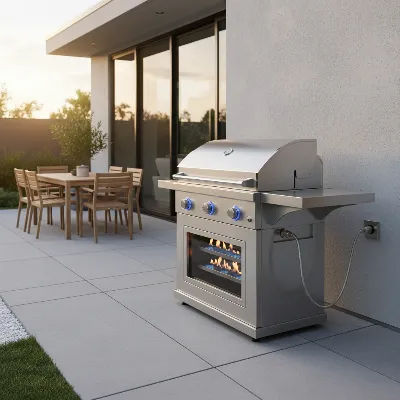 A sleek stainless steel natural gas grill connected to a home's gas line on a modern patio.
Propane Grills Explained
|
Our Picks for the Best Gas Grill in 2026
As an Amazon Associate I earn from qualifying purchases.
|
||
| Num | Product | Action |
|---|---|---|
| 1 | GasOne GP-1030S One 3 Burner Stainless Steel– Outdoor Cabinet Style with Wheels-High-Temperature Paint Coating Gas BBQ Grill – Elegant and Luxurious Design, Black |

|
| 2 | Tabletop Gas Grill 3-Burner, 22-inch Portable Propane Grill, 30,000 BTUs Stainless Steel Grill with Foldable Legs, Ideal for BBQ, Camping, Patio, Backyard, Tailgate, and Holiday Gatherings |
|
| 3 | Endark 3-burner Propane Gas Grill | 37,000 BTU Stainless Steel with Side-iFre Function | with Enameled Cast Iron Grate,Thermometer and Side Stand Wheels | Great for Patio and Garden Outdoor Cooking |
|
| 4 | R.W.FLAME 4-Burner Propane Gas Grill with Side Burner, Stainless Steel Propane Grill 42000BTU for Outdoor Cooking, with Porcelain-Enameled Cast Iron Grates, Baking Pan, Silver |
|
| 5 | Black Portable Gas Grill, Dual 10,000 BTU Burners, 275 Sq.In Cooking Space, Push-to-Start Ignition, Wind-Proof Lid with Built-in Thermometer, Perfect for Camping Tailgates & Backyard BBQ Cookouts |
|
| 6 | Monument Grills 4 Burner Propane Gas Grill, Stainless Steel Outdoor Patio Barbecue Grill, with Broil Zone Fast Heating, Knob Control, and Easy Cleanup, M410MBZ |
|
| 7 | 2 Burner Propane Gas Grill with 26,500 BTUs Output, Porcelain-Enamel Main Body and Lid, Propane BBQ Grill with Warming Rack & Side Tables for Patio, Backyard, Poolside Gatherings |
|
| 8 | Cuisinart Chef's Style Tabletop Portable Propane Grill, 20,000 BTU Stainless Steel 2-Burner Outdoor Gas Grill for Camping, Tailgates, BBQ, Hassle-Free Setup, Twist-Start Ignition, CGG-306 |
|
| 9 | WAA Portable Propane Griddle, Tabletop Portable Propane Gas Grill, Stainless Steel Flat Top Grill, Outdoor Cooking for Tailgating,Camping, RVs, BBQ, Patio, Silver (3-Burner-2) |
|
| 10 | Endark 4-burner propane gas grill | Stainless steel construction | Dual side racks and wheels | Designed for patio, garden, and backyard cooking |
|
Propane grills utilize refillable liquid propane tanks, typically 20-pound cylinders that connect directly to the grill. This design offers immense flexibility and is the most common type of gas grill found in backyards.
The most significant advantage of propane grills is their portability. Since the fuel is self-contained in a tank, you can easily move your grill to different spots on your patio, take it camping, or bring it to a tailgate party. This makes propane grills incredibly versatile for various outdoor cooking scenarios. Furthermore, the upfront cost of a propane grill setup is generally lower. There’s no need for expensive gas line installation; you simply purchase the grill and a propane tank, making it a more accessible option for many homeowners and renters. Propane also has a higher energy density per cubic foot than natural gas, which means it can burn hotter, offering faster preheating and excellent searing capabilities.
Conversely, propane grills have their share of drawbacks. The primary concern is the need for tank refills or exchanges. Running out of fuel mid-cook is a common frustration, necessitating a spare tank or a trip to a local store. This also contributes to higher ongoing fuel costs compared to natural gas, as propane is generally more expensive per unit of heat. From a safety perspective, propane fumes are heavier than air, meaning they can settle in lower areas, particularly problematic for built-in grills that require robust ventilation to prevent accumulation. While propane is considered environmentally inert in its unburned state, the lifecycle of tanks and potential wastage can also be a consideration.
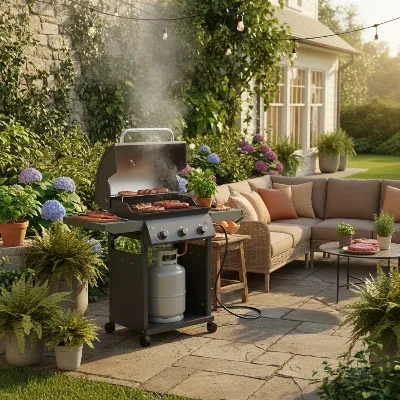 A portable propane grill with a visible gas tank on a vibrant backyard patio.
Key Factors to Consider When Choosing
Deciding between a natural gas and propane grill involves weighing several critical factors against your personal grilling habits and home setup.
Fuel Cost and Availability
The long-term fuel cost is a significant differentiator. Natural gas is generally more affordable per unit of energy. For frequent grillers, these savings accumulate over time, potentially offsetting the higher initial installation cost. Propane, while initially cheaper to set up, typically has a higher per-use cost due to tank refills. Regarding availability, natural gas offers an unlimited, always-on supply directly from your home’s utility line, eliminating fuel concerns. Propane, conversely, requires diligent monitoring of tank levels and periodic trips for refills or exchanges.
Upfront Cost and Installation
This is where the most substantial initial investment lies. A propane grill typically only requires the purchase of the grill and a tank, making its upfront cost considerably lower. Natural gas grills, however, necessitate a professional gas line installation, which can range from a few hundred to over a thousand dollars, depending on the complexity and local labor rates. This includes running a dedicated line from your home’s main gas supply to the grill location. While a significant initial outlay, this cost is a one-time expense.
Portability vs. Permanent Setup
Your desired grilling flexibility plays a crucial role. Propane grills offer unmatched portability, allowing you to move your grill anywhere on your property or take it off-site. This is ideal for renters, those with smaller patios, or individuals who enjoy grilling in different locations. Natural gas grills are by definition permanent installations, fixed to your home’s gas line. They are perfectly suited for dedicated outdoor kitchens or static grilling zones where mobility is not a priority.
Performance and Heat Output
Both natural gas and propane grills are engineered to provide excellent cooking performance. While propane has a higher BTU (British Thermal Unit) content per cubic foot, meaning it inherently burns hotter, modern natural gas grills are designed with specialized valves that allow more gas to flow to the burners. This ensures that a well-designed natural gas grill can achieve comparable heat and searing capabilities to its propane counterpart, providing a consistent and powerful grilling experience. Most grillers will find little practical difference in overall heat performance between the two types.
Environmental Impact
Both fuel types are considered cleaner-burning than charcoal or wood, producing fewer particulates and no messy ash. However, natural gas generally produces slightly less carbon dioxide when burned. Propane avoids the issue of methane leaks, which can occur with natural gas. Ultimately, both offer a greener alternative to traditional charcoal, but natural gas holds a slight edge in terms of direct emissions from combustion.
Maintenance and Safety
Both types of gas grills require regular cleaning and maintenance to ensure optimal performance and safety. Key safety considerations differ: natural gas fumes are lighter than air and disperse quickly, whereas propane fumes are heavier and can accumulate in low-lying areas, requiring vigilant ventilation, especially for built-in units. Professional installation of a natural gas line is crucial for safety and code compliance, while propane tanks require proper handling, storage, and leak checks.
Comparison Table: Natural Gas vs Propane Grills
| Feature | Natural Gas Grills | Propane Grills |
|---|---|---|
| Fuel Source | Home gas line | Portable propane tank |
| Fuel Cost (per use) | Generally lower ($0.15-$0.75/hr) | Generally higher ($0.60-$1.25/hr) |
| Upfront Cost | Higher (grill + installation) | Lower (grill + tank) |
| Portability | Fixed location | Highly portable |
| Fuel Availability | Unlimited | Requires refills/spares |
| Installation | Professional required | DIY possible |
| Heat Performance | Consistent, comparable | Consistent, comparable |
| Environmental Impact | Cleaner burning (less CO2) | Avoids methane leaks (unburned) |
> “The choice between natural gas and propane ultimately hinges on your grilling frequency, desire for portability, and willingness for upfront investment. Neither is inherently ‘better’ in all scenarios; it’s about finding the perfect fit for your outdoor cooking ambitions.” – Dr. Elena Petrova, Lead Culinary Engineer, GrillTech Innovations
Making Your Decision: Which Grill is Right for You?
The “better” grill isn’t a universal truth; it’s a personal preference based on your unique circumstances and grilling style.
Choose a Natural Gas Grill if:
- You grill frequently and value the uninterrupted fuel supply.
- You plan to create a permanent outdoor kitchen or a fixed grilling station.
- You have an existing natural gas line near your desired grill location, or you’re willing to invest in its installation.
- You prioritize long-term fuel cost savings over initial setup expenses.
- You appreciate the convenience of never needing to run out for a tank refill.
Opt for a Propane Grill if:
- You need portability to move your grill around your yard, take it tailgating, or on camping trips.
- You prefer a lower initial investment and simpler setup.
- You do not have a natural gas line readily available, or the cost of installing one is prohibitive.
- You grill less frequently and don’t mind managing propane tank levels.
- You are a renter and cannot install a permanent gas line.
Tips for Using and Maintaining Your Gas Grill
Regardless of whether you choose natural gas or propane, proper use and maintenance are paramount for safety and longevity.
- Clean After Every Use: Regularly brush your grates and empty the grease tray to prevent flare-ups and maintain optimal performance.
- Inspect Gas Lines and Connections: For natural gas grills, periodically check the line for kinks or damage. For propane, ensure the tank connection is tight and free of leaks (a soapy water test can reveal bubbles if there’s a leak).
- Deep Clean Annually: Disassemble and thoroughly clean burners, heat tents, and the firebox to remove accumulated residue.
- Protect from Elements: Use a high-quality grill cover to shield your grill from rain, sun, and debris, extending its lifespan.
- Ensure Proper Ventilation: Always grill in a well-ventilated area. For built-in propane grills, ensure the enclosure has adequate airflow to prevent gas accumulation.
- Never Leave Unattended: Always supervise your grill while it’s in operation.
- Store Propane Tanks Safely: Store spare propane tanks upright in a well-ventilated outdoor area, away from direct sunlight or heat sources. Never store propane tanks indoors or in enclosed spaces.
Conclusion
The debate between natural gas and propane grills ultimately comes down to a balance of convenience, cost, and mobility. Natural gas offers unparalleled ease with its endless fuel supply and lower running costs, making it an ideal, permanent fixture for the dedicated outdoor chef. Propane, on the other hand, provides unmatched portability and a lower entry price, perfect for those who value flexibility or have limited access to a natural gas line. Both deliver excellent grilling performance, allowing you to achieve delicious results with precision and efficiency.
Your ideal choice will enhance your outdoor cooking experience for years to come. So, which fuel source will fire up your perfect grilling season in 2026?
Frequently Asked Questions
Can I convert a propane grill to natural gas, or vice versa?
Yes, many grills can be converted between natural gas and propane, but it requires a specific conversion kit and often professional installation or adjustment to the grill’s regulators and orifices to ensure safe and efficient operation. Attempting a conversion without the correct parts and expertise can be dangerous.
Is one type of gas grill safer than the other?
Both natural gas and propane grills are safe when properly installed, maintained, and used according to manufacturer instructions. Key safety differences include natural gas dispersing into the air (being lighter than air) and propane accumulating in low areas (being heavier than air), which requires good ventilation, especially for built-in units.
