Detecting and fixing a propane leak on a gas grill is crucial for safety, as propane is highly flammable. The most effective DIY method to find a leak is the soap and water test, which involves applying a soapy solution to connections and hoses and observing for bubbles. Common leak points include hoses, connections, the regulator, and the tank valve. Addressing these issues promptly ensures safe grilling sessions.
Understanding Gas Grill Propane Leaks
Gas grills are a cornerstone of outdoor cooking, offering convenience and precise temperature control that charcoal grills can’t match. Their popularity stems from ease of use, quick heat-up times, and minimal cleanup. However, these benefits come with the responsibility of ensuring proper maintenance, especially regarding the propane fuel system.
Propane, or LP (liquid petroleum) gas, is highly flammable, and leaks pose significant fire and health risks. Propane itself is odorless, but manufacturers add a chemical called ethyl mercaptan, which gives it that strong, unpleasant scent resembling rotten eggs or a skunk spray. This additive is a crucial safety feature, alerting you to potential leaks. Beyond the smell, a continuous hissing sound near the tank or connections can also signal escaping gas. If you notice these signs, immediate action is paramount to prevent accidents. For browse all gas grill articles on this site.
Common Causes of Propane Leaks
Understanding where propane leaks typically occur can help you pinpoint the problem faster. Gas grills have several vulnerable points in their fuel delivery system that can develop leaks over time:
- Hoses: The flexible hose connecting your propane tank to the grill’s manifold can suffer from wear and tear. Over time, exposure to elements, kinks, or abrasion can cause cracks, holes, or brittleness, leading to gas escape.
- Connections and Fittings: The points where the hose attaches to the propane tank (via the regulator) and to the grill’s gas manifold are frequent leak culprits. Loose connections, worn-out rubber O-rings, or damaged threads can create pathways for gas to escape.
- Regulator: The regulator is a critical component that controls the pressure of gas flowing from the tank to the grill. A faulty regulator can manifest as a weak flame, or it might leak gas from its vent hole. Damage from rust, moisture, or age can compromise its integrity.
- Propane Tank Valve and Seal: The valve on the propane tank itself, or the rubber seal (O-ring) where the regulator connects to the tank, can degrade. Erosion, manufacturing defects, or physical damage to the tank can also lead to leaks directly from the cylinder.
- Burner Manifold and Control Valves: While less common for propane leaks, the grill’s internal manifold (the pipe distributing gas to the burners) or the individual control valves can corrode or develop issues, leading to leaks within the grill chassis.
Regular inspection and timely attention to these components are vital for safe grilling.
DIY Leak Detection: The Soap and Water Test
When you suspect a propane leak, the first and most crucial step is to perform a leak test. The safest and most effective DIY method is the soap and water test. It’s simple, inexpensive, and highly reliable.
Here’s how to do it safely:
- Shut Off Everything: Begin by ensuring all burner control knobs on your grill are in the “OFF” position. Then, immediately close the valve on your propane tank by turning it clockwise until it’s firmly shut.
- Prepare the Solution: In a small container or spray bottle, mix equal parts liquid dish soap and water. You want a solution that’s thick enough to create visible bubbles but still easy to apply.
- Visual Inspection: Before applying the soap solution, take a moment to visually inspect the entire gas system. Look closely at the propane hose for any visible cracks, cuts, bulges, or abrasions. Check all connections for obvious damage or corrosion.
- Apply the Solution: Using a clean brush, sponge, or spray bottle, generously coat all gas connections and the entire length of the hose with your soapy mixture. Pay close attention to the connection between the propane tank and the regulator, the regulator itself, the hose connections to the grill manifold, and even the tank seams if you suspect a tank issue.
- Open the Gas Slowly: Carefully and slowly open the propane tank valve one full turn counter-clockwise. Do not light the grill or turn on any burner knobs.
- Watch for Bubbles: Observe the areas you’ve covered with the soap solution. If propane gas is escaping, it will cause growing bubbles to form in the soapy water. Even small, consistent bubbles indicate a leak.
- Identify the Leak Source: The location where bubbles consistently appear is where your leak is.
If you find bubbles, immediately close the propane tank valve. Do not use the grill until the leak is fixed.
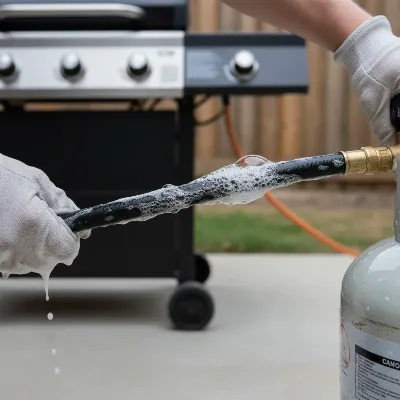 A person performing a propane leak test on a gas grill hose with soapy water, showing bubbles indicating a leak.
DIY Fixes for Common Propane Leaks
Once you’ve identified the leak, many common issues can be resolved with a few simple DIY steps. Remember, safety first – always ensure the propane tank valve is completely closed before attempting any repairs.
- Tightening Loose Connections:
- Tank-to-Regulator Connection: This connection is often hand-tightened. If you found bubbles here, close the tank valve, disconnect the regulator, ensure the O-ring is seated correctly and undamaged, then reconnect and hand-tighten firmly. Retest with the soap solution.
- Hose-to-Manifold Connection: These connections usually require a wrench. Close the tank valve, then use an adjustable wrench to carefully tighten the connection where the gas hose attaches to the grill’s manifold. Avoid overtightening, which can strip threads. Retest.
- Replacing Damaged Hoses: If your visual inspection or soap test revealed cracks, cuts, or excessive wear on the hose, it’s time for a replacement.
- Close the propane tank valve.
- Disconnect the old hose from both the tank regulator and the grill manifold.
- Attach the new hose, ensuring all connections are snug (hand-tight for the tank side, wrench-tight for the manifold side, as per manufacturer instructions).
- Perform a leak test on the new hose and connections.
- Replacing a Faulty Regulator: A damaged regulator can cause leaks or poor gas flow. Replacing it is a straightforward process.
- Close the propane tank valve.
- Disconnect the regulator from both the tank and the hose/manifold.
- Attach the new regulator, ensuring secure connections.
- Perform a leak test.
- Inspecting and Replacing Tank Seals (O-rings): The small rubber O-ring inside the tank connection point can wear out.
- Close the tank valve and disconnect the regulator.
- Inspect the O-ring for any cracks, twists, or flatness. If damaged, replace it with a new one designed for propane tanks.
- Reconnect and hand-tighten the regulator, then perform a leak test.
Table: Common Gas Grill Propane Leak Points and DIY Solutions
| Leak Point | Common Signs | DIY Fixes | When to Call a Pro |
|---|---|---|---|
| Hose | Bubbles during soap test, visible cracks, abrasions, kinks | Tighten connections, replace hose | If unable to replace hose securely, or if leak persists |
| Regulator | Hissing sound, weak flame, bubbles, leak from vent hole | Tighten connections, replace regulator | If leak persists after replacement, or if part of natural gas line |
| Tank Valve / Seal | Hissing, rotten egg smell, bubbles on valve/seal | Tighten connections (hand-tight for tank connection), inspect and replace O-ring | If tank valve is damaged, corroded, or leak persists on the tank itself |
| Manifold / Burners | Bubbles on burner manifold, irregular flames | Clean burners, replace manifold (if corroded/holed) | If manifold is corroded, or for complex valve replacement |
When to Call a Professional
While many propane leaks can be fixed with DIY methods, there are specific situations where professional help is not just recommended, but essential for your safety.
- Damaged Propane Tank: Never attempt to repair a propane tank itself. If you find bubbles on the tank’s seams, or if the tank shows signs of significant damage like dents, bulges, or heavy corrosion, immediately shut off the valve (if safe to do so), move away, and contact your propane supplier or fire department. Do not move or transport a damaged or leaking tank.
- Persistent Leaks: If you’ve tightened all connections and replaced suspected faulty components, but the soap test still shows bubbles, it indicates a more complex issue that requires expert diagnosis.
- Natural Gas Grills: If your grill is connected to a natural gas line, any suspected leak should prompt an immediate call to your gas company. DIY repairs on home gas lines are extremely dangerous and illegal in many areas.
- Uncertainty or Discomfort: If at any point you feel unsure about diagnosing or fixing a leak, or uncomfortable working with gas components, always err on the side of caution and contact a qualified grill technician or your gas supplier. Your safety is paramount.
“Safety is not just a priority; it’s a fundamental principle when dealing with gas appliances. A quick leak check can prevent a lifetime of regret.” – John Smith, Certified Gas Appliance Technician
Safety Tips for Gas Grill Usage and Maintenance
Preventing leaks is always better than fixing them. Incorporate these safety and maintenance tips into your grilling routine:
- Regular Inspections: Before each grilling season, or after a prolonged period of non-use, conduct a full visual inspection of your grill’s gas components and perform the soap and water leak test. Make it a habit to quickly check hoses and connections before every use.
- Proper Storage: Store propane tanks upright, outdoors, and away from direct sunlight, heat sources, and any ignition sources. Never store spare tanks under or near the grill. When the grill is not in use, consider covering the disconnected hose fittings and burner air intakes with small plastic bags to keep out dirt, insects, and moisture.
- Cleanliness: Keep your grill clean, especially the burner tubes. Blockages from insects, spiders, or grease can impede gas flow and sometimes mimic leak symptoms or lead to dangerous flare-ups.
- Connecting and Disconnecting: Always ensure burner knobs are off when connecting or disconnecting the propane tank. Hand-tighten the regulator to the tank firmly.
- Transportation Safety: When transporting a propane cylinder, keep it upright and secure in a well-ventilated vehicle. Never leave a cylinder in a hot car or trunk.
- No Open Flames: Never use a match, lighter, or any open flame to check for gas leaks. The soap and water test is the only safe method.
- Stay Attentive: Never leave a lit grill unattended. If a burner fails to ignite, turn off the gas, keep the lid open, and wait at least five minutes for any accumulated gas to dissipate before attempting to relight.
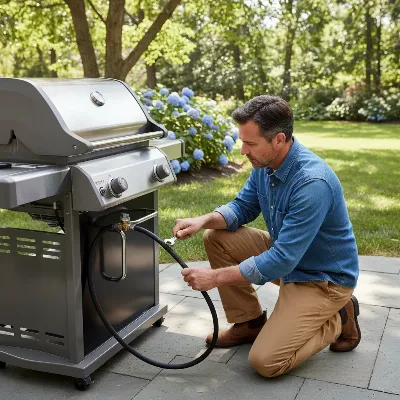 A person performing routine safety checks on a gas grill before use, including inspecting the hose and connections.
Conclusion
Detecting and addressing a propane leak on your gas grill is a critical skill for any grill owner. By understanding the common signs, regularly performing the simple yet effective soap and water test, and knowing how to execute basic DIY fixes, you can significantly reduce risks. Remember, if you ever encounter a situation beyond your comfort level—such as a damaged tank or a persistent leak—don’t hesitate to call a qualified professional. Prioritizing safety ensures that your gas grill remains a source of delicious meals and cherished memories, not a potential hazard. Regular maintenance is your best defense against unexpected issues, keeping your grilling experiences safe and enjoyable for years to come.
How often do you inspect your gas grill for potential leaks?
Frequently Asked Questions
Why does propane smell like rotten eggs?
|
Our Picks for the Best Gas Grill in 2026
As an Amazon Associate I earn from qualifying purchases.
|
||
| Num | Product | Action |
|---|---|---|
| 1 | 2 Burner Propane Gas Grill with 26,500 BTUs Output, Porcelain-Enamel Main Body and Lid, Propane BBQ Grill with Warming Rack & Side Tables for Patio, Backyard, Poolside Gatherings |

|
| 2 | Cuisinart Chef's Style Tabletop Portable Propane Grill, 20,000 BTU Stainless Steel 2-Burner Outdoor Gas Grill for Camping, Tailgates, BBQ, Hassle-Free Setup, Twist-Start Ignition, CGG-306 |
|
| 3 | R.W.FLAME 4-Burner Propane Gas Grill with Side Burner, Stainless Steel Propane Grill 42000BTU for Outdoor Cooking, with Porcelain-Enameled Cast Iron Grates, Baking Pan, Silver |
|
| 4 | Monument Grills 4 Burner Propane Gas Grill, Stainless Steel Outdoor Patio Barbecue Grill, with Broil Zone Fast Heating, Knob Control, and Easy Cleanup, M410MBZ |
|
| 5 | Endark 4-burner propane gas grill | Stainless steel construction | Dual side racks and wheels | Designed for patio, garden, and backyard cooking |
|
| 6 | WAA Portable Propane Griddle, Tabletop Portable Propane Gas Grill, Stainless Steel Flat Top Grill, Outdoor Cooking for Tailgating,Camping, RVs, BBQ, Patio, Silver (3-Burner-2) |
|
| 7 | Black Portable Gas Grill, Dual 10,000 BTU Burners, 275 Sq.In Cooking Space, Push-to-Start Ignition, Wind-Proof Lid with Built-in Thermometer, Perfect for Camping Tailgates & Backyard BBQ Cookouts |
|
| 8 | Tabletop Gas Grill 3-Burner, 22-inch Portable Propane Grill, 30,000 BTUs Stainless Steel Grill with Foldable Legs, Ideal for BBQ, Camping, Patio, Backyard, Tailgate, and Holiday Gatherings |
|
| 9 | Endark 3-burner Propane Gas Grill | 37,000 BTU Stainless Steel with Side-iFre Function | with Enameled Cast Iron Grate,Thermometer and Side Stand Wheels | Great for Patio and Garden Outdoor Cooking |
|
| 10 | GasOne GP-1030S One 3 Burner Stainless Steel– Outdoor Cabinet Style with Wheels-High-Temperature Paint Coating Gas BBQ Grill – Elegant and Luxurious Design, Black |
|
Propane itself is odorless, but manufacturers add a chemical called ethyl mercaptan to give it a distinct, strong smell, similar to rotten eggs or a skunk, for safety reasons. This makes it easier to detect a leak.
Can I use my gas grill if I suspect a minor leak?
No, absolutely not. Even a seemingly minor propane leak can pose a severe fire hazard. You should immediately shut off the gas supply and address the leak before using the grill again.
What should I do if my propane tank itself is leaking?
If your propane tank is leaking from the tank body or valve and cannot be resolved by tightening connections, immediately close the tank valve (if safe), move everyone away from the area, and contact your propane supplier or local fire department. Do not attempt to move or repair the tank yourself.
How often should I perform a gas leak test on my grill?
It’s recommended to perform a gas leak test with the soap and water solution at the start of every grilling season, every time you connect a new propane tank, after a period of non-use, or if you ever smell gas.
What tools do I need to fix a gas grill propane leak?
For most DIY fixes, you’ll need dish soap, water, a spray bottle or brush for application, and possibly an adjustable wrench for tightening hose connections to the manifold. For replacements, you’ll need the new component (hose, regulator, O-ring).
Frequently Asked Questions
Why does propane smell like rotten eggs?
Propane itself is odorless, but manufacturers add a chemical called ethyl mercaptan to give it a distinct, strong smell, similar to rotten eggs or a skunk, for safety reasons. This makes it easier to detect a leak and prevent potential hazards.
Can I use my gas grill if I suspect a minor leak?
No, absolutely not. Even a seemingly minor propane leak can pose a severe fire hazard. You should immediately shut off the gas supply at the tank valve and address the leak before using the grill again to ensure safety.
What should I do if my propane tank itself is leaking?
If your propane tank is leaking from the tank body or valve and cannot be resolved by tightening connections, immediately close the tank valve (if safe), move everyone away from the area, and contact your propane supplier or local fire department. Do not attempt to move or repair the tank yourself due to extreme danger.
How often should I perform a gas leak test on my grill?
It's recommended to perform a gas leak test with the soap and water solution at the start of every grilling season, every time you connect a new propane tank, after a prolonged period of non-use, or if you ever smell gas. Regular checks, such as before every use, are also advised for hoses and connections.
What tools do I need to fix a gas grill propane leak?
For most DIY fixes, you'll need basic household items like liquid dish soap and water, along with a spray bottle or brush for application. You may also need an adjustable wrench for tightening hose connections to the grill manifold. For component replacements, you'll need the new part (e.g., hose, regulator, or O-ring).

The information about the tank valve being a common leak point was helpful, but I wish there were more details on what to do if the valve itself is faulty. My issue seems to be with the valve, and while the soap test confirmed it, I’m still not sure if I should try to fix it or just replace the whole tank. Still, good starting point.
This guide was exactly what I needed. I’d been putting off checking my grill for a while, but the clear explanation of why propane leaks are dangerous motivated me. The step-by-step for the soap and water test made it super easy to follow. Now I feel much safer firing up the grill.
Great advice on checking the hoses and connections. I had a tiny leak I couldn’t pinpoint, but after reading this, I systematically went through each part. Turns out it was a loose hose clamp. It’s good to have a reminder about how important safety is with propane.
I was so worried when I smelled gas near my grill. The soap and water test mentioned here was a lifesaver! Found the leak right at the regulator connection, tightened it up, and no more smell. Grilling safely again thanks to these tips. Really appreciate the clear instructions.